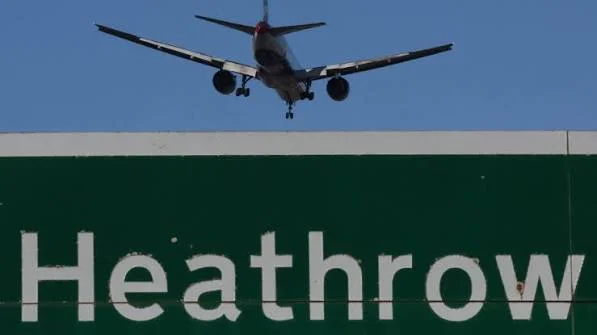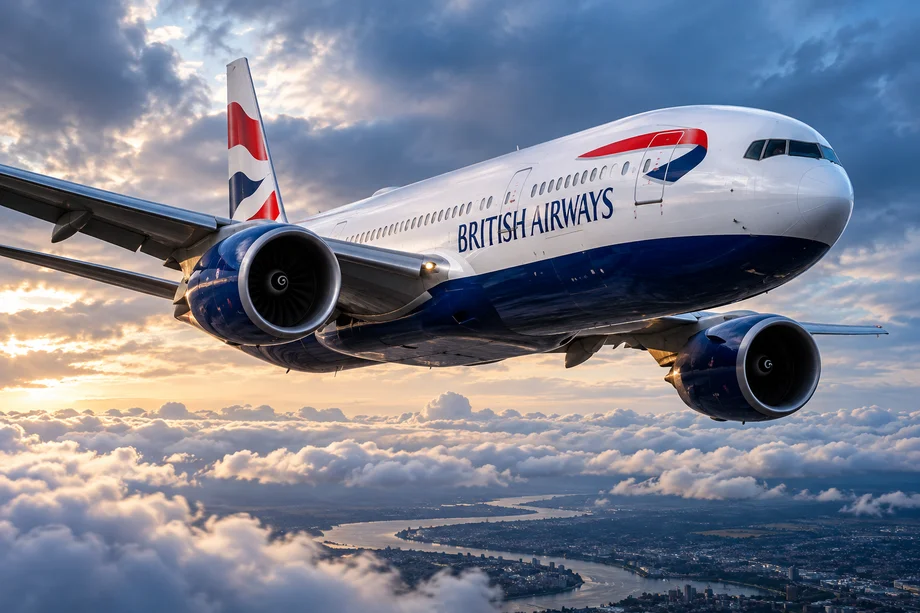
A British Airways transatlantic flight from London to Chicago was forced to return to Heathrow on Monday after making a dramatic emergency descent of about 27,000 feet.
Flight BA295, operated by a Boeing 777, was heading from London Heathrow to Chicago O'Hare when the incident occurred over Ireland.
According to flight tracking data cited by NBC News, the aircraft descended from approximately 36,000 feet to around 9,000 feet in roughly seven minutes. The plane then turned back toward the United Kingdom.
The aircraft transmitted the emergency code 7700, the international transponder signal used by pilots to alert air traffic controllers to a general emergency. The code itself does not reveal the specific nature of the problem.
Reports indicated that oxygen masks were deployed for passengers during the incident. Aviation outlet Paddle Your Own Kanoo reported that the aircraft experienced a pressurization problem, while British Airways later described the cause more broadly as a “technical issue.”
After the emergency descent, BA295 remained airborne for several hours while returning toward Heathrow. Flight tracking showed the Boeing 777 flying repeated loops before landing, allowing the aircraft to reduce its fuel load following the unexpectedly early return.
British Airways confirmed that the aircraft landed safely at Heathrow and passengers were able to leave the plane normally. The airline said its teams were working to reorganize passengers' travel plans and stressed that the safety of customers and crew remained its priority.
No injuries were immediately reported.
The incident quickly triggered a surge in online interest, with “British Airways,” “British Airways emergency” and “BA295” appearing among rapidly rising searches as news of the emergency spread.