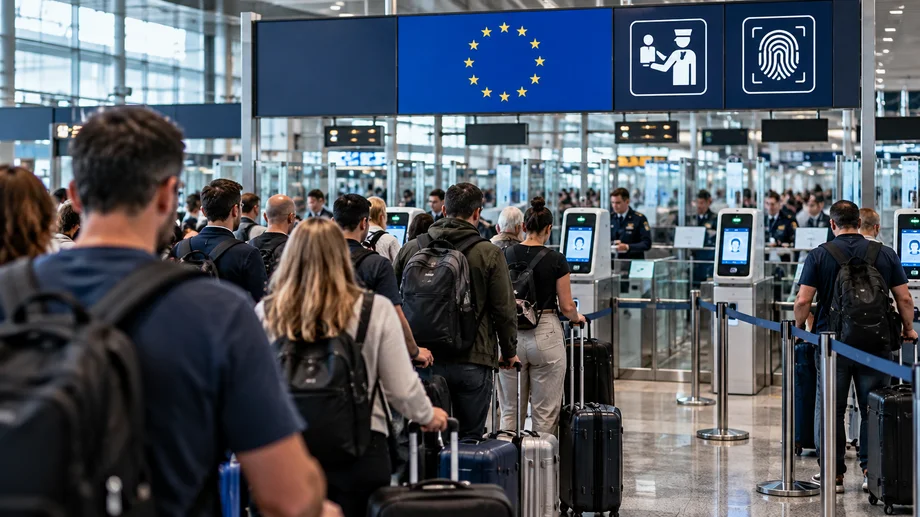
Travelers planning to visit Europe are facing a new reality at airports. The electronic access and exit system, known as EES, designed to modernise border controls, has caused considerable delays in some of the most popular tourist destinations.
According to the British newspaper The Times, the European Union has allowed nine countries to temporarily suspend certain biometric controls when necessary to avoid gathering passengers.
The countries that have received this flexibility are France, Germany, Italy, Belgium, the Netherlands, Greece, Malta, Portugal and Switzerland.
The decision comes after the problems reported at airports, where travellers from countries outside the European Union have been forced to wait long for biometric data registration.
magazine T TIME has reported that during busy waiting periods at several European airports, it has reached up to five hours, causing some passengers to lose flights.
System EES, which became fully operational on April 10, 2026, replaces the traditional sealing of electronic registration passports.
According to the European Commission, travelers subject to this system are registered passport records, facial image and fingerprints. Information is used to check access, exits and lengths of stay in the Schengen area.
However, technology aimed at accelerating procedures has created difficulties during its implementation.
Airports have reported technical problems, lack of personnel and longer registration times for travelers using the system for the first time.
According to The Times, the nine countries' border authorities could temporarily interrupt certain biometric controls when the flow of travelers causes overload. This does not mean removing border controls or abolishing the EES system.
The changes especially affect travelers from the United States, Great Britain, Canada, Australia and other countries outside the EU who travel for short-term stays in the Schengen area.
Travel experts advise passengers to count additional time for border controls, especially during busy periods and at larger airports.
Meanwhile, the European Union continues preparations for the E system TIAS, which will request initial authorisation from visa-excluding travelers after it enters operation.
For tourists, the message is clear: Even though Europe is investing in more modern borders, travel to certain destinations may still require more patience and planning.
Temporary flexibility allowed by European authorities aims to ease pressure on airports, while the system EES continues to be implemented as part of the EU strategy for modernising borders.
For international travellers, the most practical advice remains checking entry requirements before departure and planning enough time for border procedures, especially during the tourist season and at high- traffic airports.