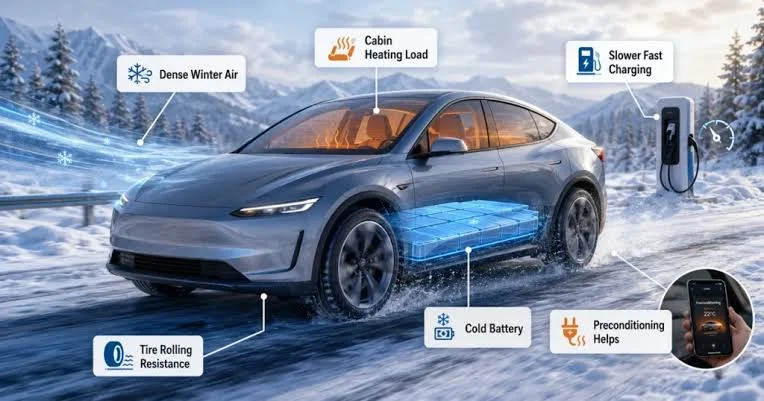
Cold conditions affect battery performance, while heating the cabin uses energy that could otherwise support driving. The impact varies by vehicle, temperature, journey length and heating system.
For drivers facing Canadian winters, northern European conditions or colder parts of the United States, planning around those differences matters. The same considerations apply to Australian drivers travelling through alpine regions or other cold areas.
The Department of Energy’s winter EV guidance recommends warming the vehicle while it is connected to charging power. Where supported, scheduled preconditioning can prepare the cabin and battery before departure.
A heat pump can also improve cabin-heating efficiency in many conditions, although performance differs between models and temperatures.
Charging requires its own planning. A cold battery may accept power more slowly, and charging usually slows further as the battery approaches full. Follow the manufacturer’s instructions for battery preconditioning and charge targets instead of assuming one setting suits every EV.
Use recent consumption on comparable journeys when estimating winter range. Leave a practical reserve and identify an alternative charging location along longer routes.
Covered parking can help, while correct tire pressure remains important as temperatures change. Keep heating and demisting sufficient for comfort and visibility.
Winter ownership becomes easier when the trip plan reflects the conditions. The range displayed during a warm test drive should not be treated as a promise for every season.



