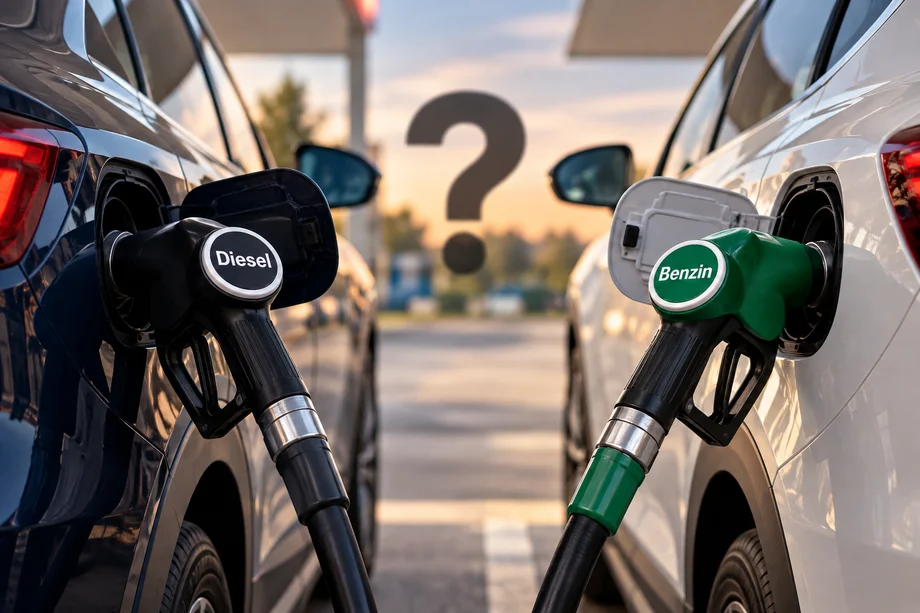
For many car buyers, the choice between a diesel engine and a gasoline car continues to be one of the most important financial decisions.
Diesel is traditionally considered more economical for long travel, while gasoline is often seen as more practical elections for urban use. But their difference is not determined solely by fuel consumption.
According to the German automobile organization ADAC, the real cost of ownership of a vehicle must also include amortization, maintenance, insurance, taxes, and repair costs.
This means that a car that consumes less fuel is not necessarily cheaper in the long run.
Diesel engines usually have an advantage over fuel consumption, especially during long trips to the highway. They also offer high - rollers, which can be useful for large vehicles and cargo trips.
However, modern Diesel vehicles have complex emissions control systems, including the filter of DPA particles and, in many models, SCR systems that use AdBlue fluid.
These technologies help limit pollution, but they can bring additional maintenance and repair costs.
A common problem relates to the use of diet only for very short distances.
When the engine fails to reach the necessary work temperature, the filter regeneration process The DPF may not end properly. If this is repeated over and over again, it could cause jams and a need for technical interference.
For this reason, a person who moves mainly in the city and travels only a few miles a day may not benefit from saving the fuel he offers.
Gas engines, on the other hand, are often more suitable for short trips, although they too need regular maintenance.
The difference becomes clearer when the annual mile is calculated.
A director who travels 25 thousand or 30,000 miles per year, mainly on the highway, can be significantly spared by a low - consumption diet.
But a person who travels just 7 thousand or 8,000 miles per year may find that fuel savings do not compensate for the highest purchase or possible maintenance costs.
Fuel prices also affect the outcome. In some diet markets it is cheaper than gasoline, while in others the difference is small or in favour of gasoline.
For users of used cars, experts recommend control of the history of the service, the state of the engine and emissions systems ahead of the purchase.
A high - mile [high - mile] diet vehicle and unclear maintenance stories may require repairs that exceed the savings of several years in fuel.
In the meantime, hybrid alternatives are increasingly changing this comparison, especially for leaders who spend much time in urban traffic.
The conclusion is that there is no engine that is automatically more economic for all.
The best choice depends on the miles that travel each year, the type of roads, the price of the vehicle, and the real maintenance costs.
Before buying, a simple total cost estimate for five years could be more valuable than comparing fuel consumption in catalogues.



