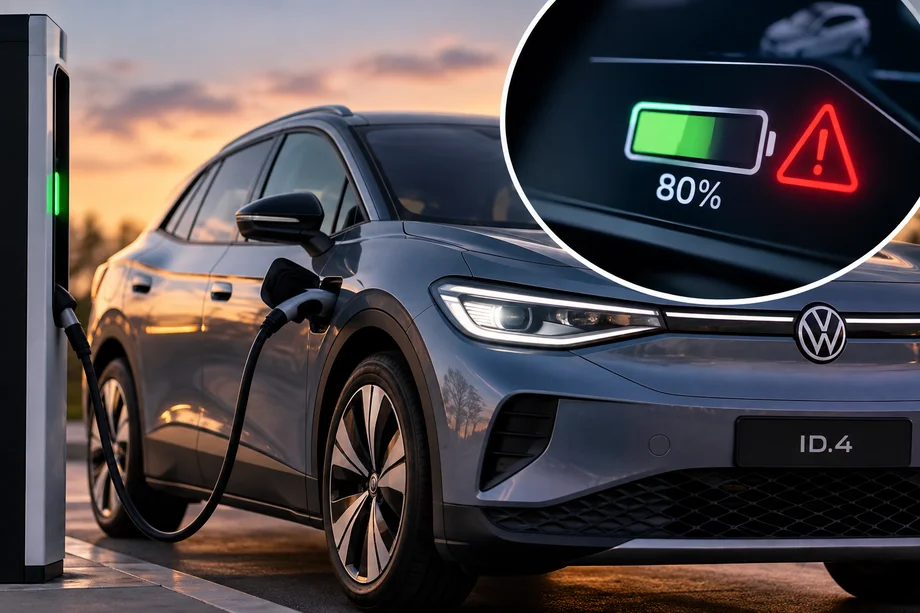
Volkswagen has announced the withdrawal of 2,524 ID.4 electric vehicles in the United States, after a possible problem with high - blood pressure battery that could increase fire risk.
According to Electricek's report, the move includes vehicles of 2023 to 2026 production years and is associated with specific instructions for owners.
The company recommends to drivers of affected vehicles not to charge the battery with over 80 percent of its capacity until a final solution is available.
According to documentation handed over to the American National Administration for Road Traffic Security (NHTSA), the problem is linked to the possibility of spreading heat within the battery, a process that can cause fire under certain circumstances.
The security report shows that the fundamental cause of the problem has not yet been fully determined.
However, several modes of charge combined with a level of battery over 80 percent are suspected to contribute to the appearance of the defect.
This development is especially important to the owners of electrical vehicles, since the battery is one of the most expensive and important components for car safety.
Unlike vehicles with traditional engines, electric machines use high - powered batteries that require advanced temperature control systems and protection from defects.
Such a problem does not mean that any vehicle involved in withdrawal will be set on fire. The move aims to reduce the risk before possible incidents occur.
Volkswagen has not yet announced a final date for the technical solution to the problem.
For owners, this means that vehicle use may continue to require respect for temporary charge restrictions and other official security guidelines.
The attraction affects vehicles identified in the American market and does not automatically imply that all ID.4 models sold in Europe or other markets have the same problem.
Owners can check whether their vehicle is involved in this campaign through identification number V. IN, using the official NHTSA system or contacting Wolfgang's authorised representative.
The news comes at a time when the automotive industry is investing billions of dollars in the development of safer batteries, with greater autonomy and shorter time charge.
However, withdrawal cases show that battery safety remains one of the main challenges for electric automotive producers.
For car executives, the message is clear: technical updates and official reports of the manufacturer must be followed carefully, especially when linked to the battery and electrical systems of the vehicle.



