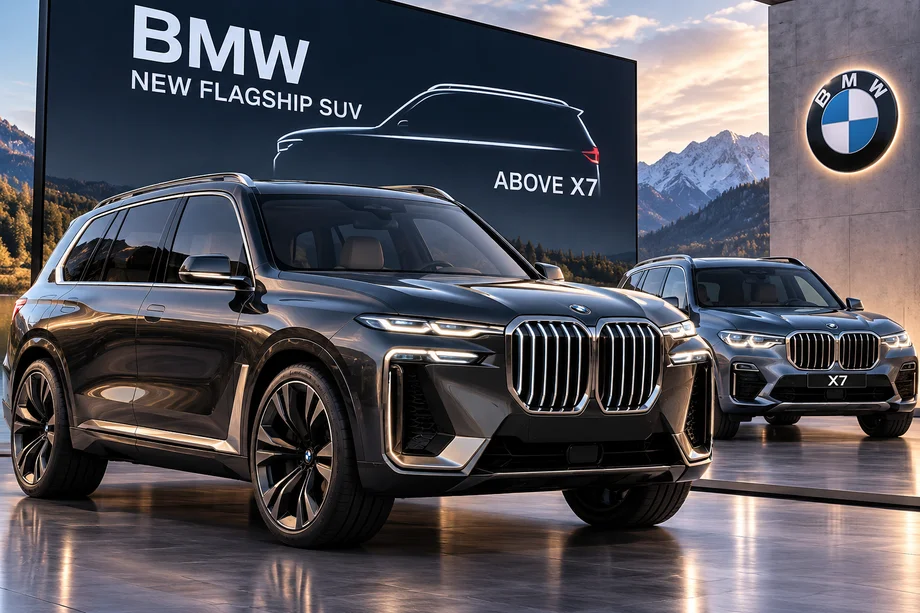
BMW� is preparing one of the biggest changes to its vehicle lineup in years, including a new luxury SUV positioned above the X7 as the German automaker attempts to restore profitability and respond to growing pressure from China.
Details of the strategy emerged on September 30 as BMW prepared to outline its medium term plans to investors at its Capital Markets Day.
The Munich based manufacturer is targeting an automotive operating margin of 3 percent to 5 percent by 2028, according to analysts at Bernstein who met with management ahead of the presentation.
BMW eventually wants to return to margins of between 8 percent and 10 percent in the early 2030s. �
Reuters +1
Reaching those targets will require major changes.
BMW plans to simplify its model range, increase local production, cut costs and push further into highly profitable luxury vehicles.
At the same time, around 8,000 jobs are being eliminated, primarily in Germany. �
Reuters
A new BMW SUV will sit above the X7
One of the most eye catching elements of BMW's strategy is a new luxury SUV positioned above the current X7.
The X7 is already BMW's largest conventional SUV and one of its most expensive mainstream models.
A vehicle positioned above it would give BMW a new flagship in one of the most profitable parts of the global automotive market.
Reuters reported that the new SUV forms part of a broader effort to increase sales of higher priced vehicles. �
Reuters
BMW is also expected to expand its M performance division and Alpina range from 2027.
The strategy reflects a basic financial reality for premium manufacturers: expensive models can generate considerably larger profit per vehicle than entry level cars.
BMW is also simplifying its lineup
BMW's future will not simply involve adding more vehicles.
The company is also expected to reduce complexity by offering fewer models and increasing the number of components shared across different vehicles.
Bernstein analysts said BMW plans to simplify its model lineup as part of the restructuring. �
Euronext
Complexity can be expensive for automakers.
Different engines, platforms, electronics, software systems and vehicle variants increase engineering and manufacturing costs.
Reducing that complexity can help BMW lower expenses while continuing to offer vehicles across multiple price categories.
Around 8,000 jobs are being cut
The transformation carries a significant cost for BMW employees.
The company is implementing a voluntary redundancy program affecting approximately 8,000 positions, with most reductions concentrated in Germany.
The cuts represent roughly 5 percent of BMW's global workforce and are expected to be completed by the end of 2027. �
BMWBLOG +1
Administrative, planning, development and other office based roles are expected to account for much of the reduction.
Production workers are less directly affected by the current program.
BMW employed approximately 154,500 people at the end of 2025. �
BMWBLOG
The reductions are part of a broader wave of restructuring across Germany's automotive industry as manufacturers confront high costs, the transition to electric vehicles and increasingly powerful Chinese competitors.
China is BMW's biggest problem
China has become the central challenge facing BMW.
For years, the country was the company's largest individual market.
That relationship has changed rapidly.
BMW's vehicle deliveries in China fell 20.4 percent during the first half of 2026, while global deliveries declined 4.2 percent. �
Sunday World
Chinese consumers increasingly have access to sophisticated domestic electric vehicles from manufacturers including BYD and a growing group of premium EV companies.
Those brands are competing aggressively on price, software, autonomous driving features and in car technology.
BMW, Mercedes Benz, Audi and other European premium manufacturers are consequently facing a market that looks very different from the one that produced years of rapid growth.
BMW has issued several profit warnings linked partly to its performance in China. �
Reuters
BMW profits have fallen sharply
The financial impact is already visible.
BMW's first half revenue declined about 8 percent to €62.3 billion, while pretax profit fell approximately 29 percent to €4.05 billion. �
Ad Hoc News
Profitability in the automotive division has been particularly weak.
BMW's automotive operating margin fell to just 2.3 percent in the second quarter of 2026.
That compares with 5.4 percent during the same period a year earlier. �
Ad Hoc News
BMW currently expects its automotive margin for the full 2026 financial year to remain between 1 percent and 3 percent.
The company's new strategy is designed to push that figure gradually higher.
Neue Klasse is central to BMW's comeback plan
The most important product in BMW's transformation may be the new iX3.
The electric SUV is the first major production vehicle based on BMW's Neue Klasse technology architecture.
Neue Klasse introduces new batteries, electronics, software and electric drive systems that BMW intends to spread across much of its future lineup.
The company is betting that the platform can make its electric vehicles more competitive while reducing manufacturing complexity.
The early European response to the new iX3 has been encouraging.
BMW's plant in Debrecen, Hungary, has already increased production as demand for the electric SUV grows.
But the bigger test will come in China, where competition in electric vehicles is particularly intense.
The next BMW 3 Series gets a €2 billion investment
BMW is not abandoning its traditional German manufacturing base.
The company plans to invest approximately €2 billion in German production of the next generation 3 Series sedan. �
Reuters
The 3 Series remains one of BMW's most recognizable vehicles globally.
The investment shows that Germany will continue to play an important manufacturing role even as BMW increasingly adapts vehicles and production to individual markets.
Local production is becoming a larger part of the company's strategy.
BMW wants vehicles sold in major markets to be manufactured closer to those customers where practical.
That can reduce logistics costs and provide some protection against tariffs and currency movements.
BMW is changing its cars for China
The China strategy will involve significantly more localization.
BMW has already been developing market specific versions of future vehicles with software and technology tailored to Chinese consumers.
That includes partnerships with local technology companies for autonomous driving, navigation and artificial intelligence services.
The approach reflects an important shift.
European luxury brands once sold broadly similar vehicles around the world, with relatively limited regional changes.
China's rapidly evolving EV market increasingly requires manufacturers to develop technology specifically for Chinese customers.
BMW now appears prepared to embrace that model more aggressively.
Europe and the US remain stronger
BMW's problems are not equally severe everywhere.
The company's European and US production facilities remain highly utilized, according to Reuters. �
Reuters
Sales performance has also been stronger outside China.
BMW deliveries increased around 5.4 percent in Europe and 3.9 percent in the United States during the first half of 2026. �
Sunday World
That regional difference explains why localization is becoming such an important part of the company's strategy.
BMW does not necessarily need the same response in every market.
Instead, it is trying to protect profitable operations in Europe and North America while restructuring its approach to China.
BMW shares have fallen sharply
Investors have already punished BMW for its weaker financial performance.
The company's shares have fallen by more than one third over the past year and recently traded close to their lowest level in approximately six years. �
Reuters +1
BMW shares rose around 1.4 percent in early trading on September 30 as investors awaited further details of the new strategy. �
Reuters
The company now faces pressure to demonstrate that its cost reductions and new models can translate into higher profits.
Germany's car industry is under pressure
BMW's restructuring is part of a much larger transformation affecting Germany.
Mercedes Benz is separately seeking approximately €800 million in labor cost savings in Germany, according to a September 24 Reuters report. �
Reuters
Volkswagen is also pursuing major restructuring and cost reductions.
German manufacturers face several simultaneous challenges: expensive domestic production, weaker Chinese demand, competition from Chinese EV companies, large investments in new technology and changing global trade rules.
For an industry that has been one of the foundations of Germany's economy for decades, the transition has significant consequences beyond individual car companies.
BMW is betting on fewer cars with bigger profits
BMW's new strategy shows where management believes the company needs to go.
It wants a simpler vehicle portfolio, more local manufacturing, lower costs and a greater emphasis on expensive models.
The new SUV positioned above the X7 provides perhaps the clearest symbol of that strategy.
BMW is not trying to recover profitability simply by selling more vehicles.
It increasingly wants to make more money from each vehicle it sells.
The company is simultaneously investing heavily in the Neue Klasse generation, putting around €2 billion into future 3 Series production in Germany, reducing approximately 8,000 jobs and adapting its business to a Chinese market that has become far more difficult.
Whether those changes can restore BMW's automotive margin from the recent 2.3 percent level toward its long term 8 percent to 10 percent ambition will become one of the defining tests for Germany's largest premium automaker over the next several years.



