The automobile is one of the most important inventions in modern history. Today, cars are a normal part of everyday life, but the vehicles we know now are the result of more than a century of engineering, experimentation and technological development.
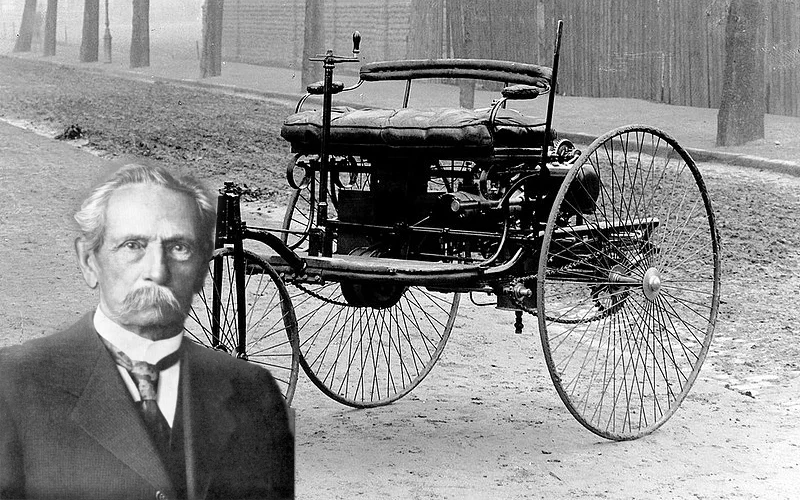
The story of the modern automobile is generally traced back to Germany in the 1880s. In 1885, engineer Karl Benz developed a three-wheeled vehicle powered by a petrol engine. On January 29, 1886, he filed the patent that is widely regarded as one of the defining moments in automotive history. The Benz Patent-Motorwagen became the first practical petrol-powered automobile.
The early car was extremely different from modern vehicles. It had three wheels, a single-cylinder engine and a maximum speed of around 12 km/h. It was also relatively heavy compared with its small size, weighing about 265 kilograms. Despite its limitations, the Motorwagen demonstrated that people could travel using a self-powered road vehicle rather than relying on horses.
Another important figure of the early automobile era was Gottlieb Daimler, who, together with Wilhelm Maybach, developed a four-wheeled petrol-powered vehicle in 1886. During the following years, manufacturers in Europe began experimenting with different designs, engines and technologies. Companies such as Renault and Fiat eventually became important names in the growing automotive industry.
One of the biggest changes came in the early 20th century when automobiles started becoming available to ordinary people. Henry Ford and the Ford Motor Company played a major role in this transformation with the introduction of the Model T in 1908.
The Model T was designed to be affordable, durable and relatively simple to operate. Ford later used moving assembly-line production to manufacture cars more efficiently and reduce costs. More than 15 million Model Ts were eventually produced between 1908 and 1927, helping turn the automobile from a luxury product into a form of transportation available to millions.
During the 1920s and 1930s, the automobile industry continued to develop rapidly. Manufacturers introduced more powerful engines, improved braking systems, better suspension and more comfortable interiors. Cars also became an important part of popular culture, while racing helped manufacturers develop new technologies and performance ideas.
The decades after World War II brought another major transformation. Cars became increasingly stylish, powerful and technologically advanced. American manufacturers became famous for large vehicles and powerful engines, while European companies developed luxury, sports and performance cars. Japanese manufacturers also began building a strong automotive industry, eventually becoming major global competitors.
Technology continued to change the driving experience. Automatic transmissions, air conditioning, power steering, airbags, electronic systems and advanced safety equipment gradually became common. Computers eventually became an essential part of modern vehicles, controlling everything from engine management to safety systems.
The automobile also experienced an important return to electric power. Electric vehicles existed more than a century ago, but petrol-powered cars became dominant during the 20th century. In recent decades, improvements in batteries, electric motors and charging infrastructure have helped electric vehicles return to the mainstream.
Today, cars are entering another major technological era. Modern vehicles can feature large digital displays, advanced driver-assistance systems, smartphone connectivity, over-the-air software updates and increasingly sophisticated electric powertrains. Some manufacturers are also developing increasingly capable autonomous-driving technologies.
From a simple three-wheeled vehicle traveling only a few kilometers per hour to modern cars capable of high performance while offering advanced digital technology, the automobile has changed dramatically.
The next chapter of automotive history is already being written. Electric power, software, artificial intelligence and new manufacturing technologies are changing what a car can be. Yet despite all these changes, the basic idea remains remarkably similar to Karl Benz’s original vision: creating a machine that allows people to move freely on the road.



