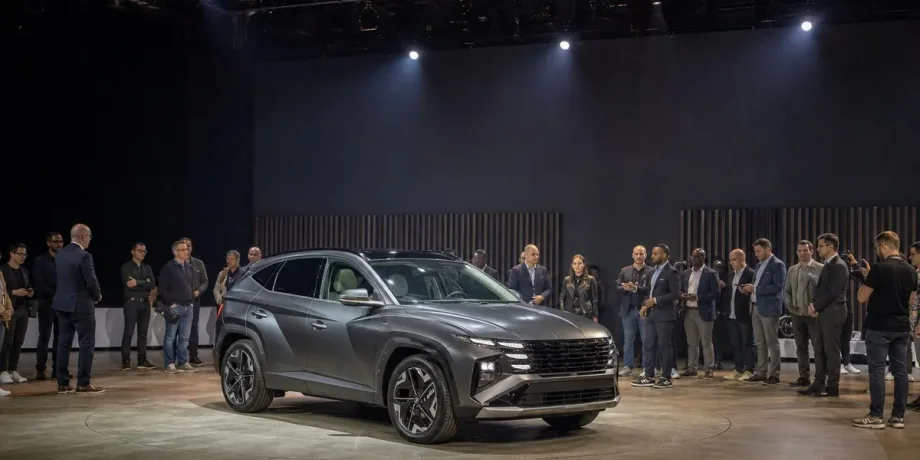
Hyundai has unveiled the all-new TUCSON, presenting a major redesign of one of its most important global SUV models.
The new vehicle was revealed in New York and introduces a new design philosophy called “Art of Steel.”
Hyundai says the redesigned TUCSON is longer, wider and taller than the previous model.
The company is also introducing a next-generation hybrid system designed to improve efficiency while maintaining performance.
Hyundai says the hybrid system is targeting fuel economy of up to 42 mpg.
The new TUCSON also introduces Pleos Connect, Hyundai's next-generation infotainment system featuring AI technology.
The interior has been redesigned with an emphasis on space, storage and easier controls.
Hyundai says the cabin includes flexible storage solutions and available relaxation features.
The company is also presenting the TUCSON XRT PRO, a more rugged version designed for off-road use.
The XRT PRO has 210 millimeters of ground clearance and additional equipment intended to improve performance on difficult terrain.
A plug-in hybrid version will also be available.
Hyundai says the plug-in hybrid produces 292 horsepower and has an estimated electric-only range of 81 kilometers.
The combination of conventional hybrid, plug-in hybrid and other powertrain options gives Hyundai flexibility as different markets adopt electrification at different speeds.
The new TUCSON is strategically important because the SUV segment remains one of the largest areas of the global automotive market.
Consumers continue to move toward SUVs because of their space, practicality and increasingly sophisticated technology.
The new model therefore combines several trends within the industry.
Hyundai is increasing electrification while also adding advanced digital systems and new driver-assistance technologies.
The vehicle's design is another important element.
The “Art of Steel” philosophy uses sharper shapes and stronger visual elements than previous versions.
Hyundai is positioning the new TUCSON as a major step in its global product strategy.
The company describes the vehicle as one of its most ambitious product developments.
The global rollout is planned to begin from 2027.
That means specifications and equipment can vary depending on the market.
The automotive industry is currently experiencing a rapid shift toward electrified vehicles.
Manufacturers are developing hybrid and plug-in hybrid systems alongside fully electric vehicles.
Hyundai's approach with the TUCSON reflects that transition by offering multiple powertrain choices.
The company is also investing heavily in connected-car technology.
Pleos Connect is designed to make the vehicle's infotainment system more intelligent and connected.
The combination of technology, efficiency and SUV practicality is intended to keep TUCSON competitive in a crowded global segment.
Hyundai will now begin preparing the vehicle for its international launch.
More information about pricing, local specifications and availability is expected as the rollout approaches.
For now, the new TUCSON represents Hyundai's latest response to changing consumer expectations and increasing competition in the global SUV market.



