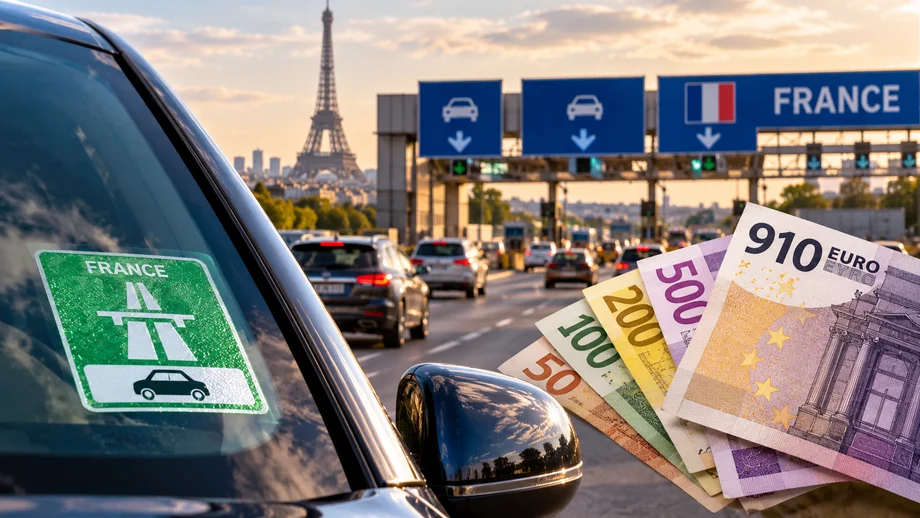
French motorists could one day face an annual charge for owning a car as a new proposal to reshape vehicle taxation generates widespread debate across the country.
The idea comes from the Institut Mobilités en Transition, or IMT, which has proposed an annual vehicle charge that could be introduced from 2030. It is designed partly to compensate for declining fuel tax revenues as more drivers switch from petrol and diesel vehicles to electric cars.
The proposal has quickly attracted attention because some reports have highlighted a potential annual cost of €910.
However, that figure would not apply to every driver.
According to details of the IMT proposal reported by 01net, the €910 figure represents one of several hypothetical household examples. It involves a relatively wealthy household living in a city, owning multiple vehicles, including a particularly heavy and older combustion powered car.
At the opposite end, another example suggests an annual charge of just €30 for a low income household living in a rural or suburban area and owning a light electric vehicle assembled in Europe.
For private cars overall, the IMT estimates an average annual charge of around €140 in 2030, potentially increasing to €260 by 2035.
Why is France considering such an idea?
The rapid growth of electric vehicles creates a long term challenge for governments because electric cars do not consume petrol or diesel and therefore generate far less fuel tax revenue.
French road taxation generated approximately €67.5 billion for public authorities in 2025, according to figures cited in the IMT analysis. Without changes to taxation, the institute estimates that government revenues could eventually fall significantly as the vehicle fleet becomes increasingly electrified.
Under the proposed system, the annual payment could depend on several factors, including vehicle weight, age, emissions and powertrain, as well as household income, location and the number of vehicles owned.
Electric vehicles would not necessarily escape the charge.
Unlike France's historic windshield vignette, however, motorists would not need to display a physical sticker. The proposed charge would instead be linked to the registered vehicle owner and collected annually.
For now, French drivers do not need to pay this new charge.
The proposal has not been adopted into law, and the IMT envisages 2030 as a possible starting point if policymakers eventually decide to introduce such a system.
Still, the possibility of bringing back an annual vehicle charge more than two decades after France abandoned its old vignette system has been enough to trigger thousands of searches and renewed debate over who should pay for the country's roads in the electric vehicle era.



