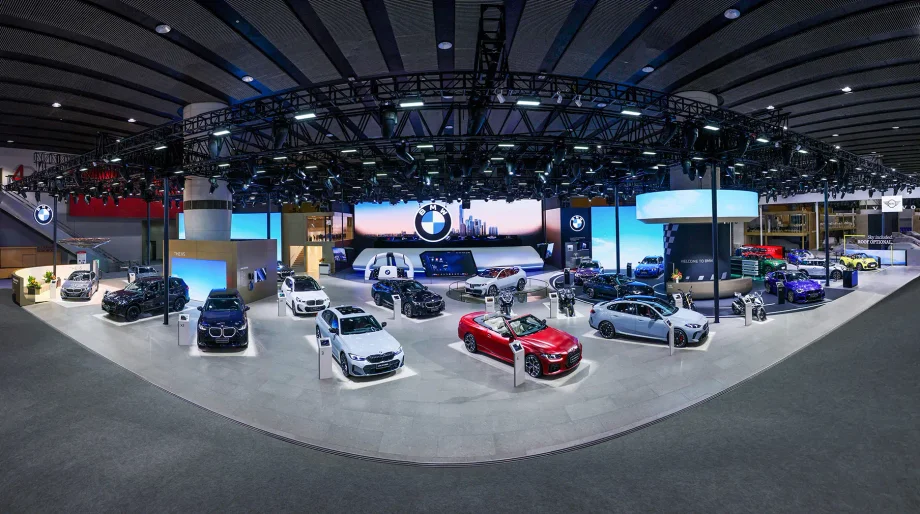
A Reuters report published on October 1 says BMW is considering job reductions, new models and greater use of artificial intelligence as it attempts to improve its performance. The company has also faced weaker results in China, one of the world's most important automotive markets. SSowetan
The developments illustrate the wider challenges facing European premium car manufacturers.
China becomes increasingly important
European carmakers have traditionally relied heavily on China for sales and growth. However, domestic Chinese manufacturers have become increasingly competitive, particularly in electric vehicles.
Chinese companies have been able to introduce new electric models quickly while offering consumers advanced technology and competitive prices.
This has created additional pressure for European manufacturers such as BMW, Mercedes-Benz and Volkswagen to accelerate their electric vehicle strategies.
Ford CEO Jim Farley recently described the growth of Chinese automakers in Europe as a major development, noting that the European market has already experienced significant disruption. RReuters
Europe debates the future of the car industry
The challenges facing BMW are occurring alongside a wider debate about Europe's automotive regulations.
France and Germany are currently involved in discussions surrounding future European Union car regulations, including questions related to emissions, industrial policy and the production of vehicles within Europe. FFinancial Times
The European automotive industry is also watching discussions around “Made in Europe” requirements and policies designed to strengthen the region's domestic manufacturing base.
These debates could have long-term consequences for manufacturers, suppliers and consumers.
New technology becomes central
BMW is also increasing its focus on technology and new vehicle models as it attempts to respond to changing customer expectations.
Artificial intelligence is becoming increasingly important across the automotive industry, from manufacturing and vehicle development to driver assistance and software.
At the same time, manufacturers must continue investing in electric vehicles while dealing with questions about consumer demand and profitability.
The luxury automotive market is also changing. Reuters recently highlighted how premium brands are developing new electric vehicles while attempting to maintain the design, comfort and identity associated with traditional luxury cars. RReuters
A crucial period for European manufacturers
BMW's situation reflects a broader transformation taking place throughout Europe's automotive sector.
Traditional manufacturers are dealing with multiple challenges at the same time: electric vehicle development, Chinese competition, changing regulations, tariffs, weaker demand in some markets and the need to invest in new technologies.
For consumers, this period could result in a wider range of vehicles and faster technological development.
For European manufacturers, however, the next few years will be important as they attempt to remain competitive in a rapidly changing global automotive market.
BMW's plans involving new models, technology and restructuring will therefore be closely watched as the company works to adapt to the new environment.



