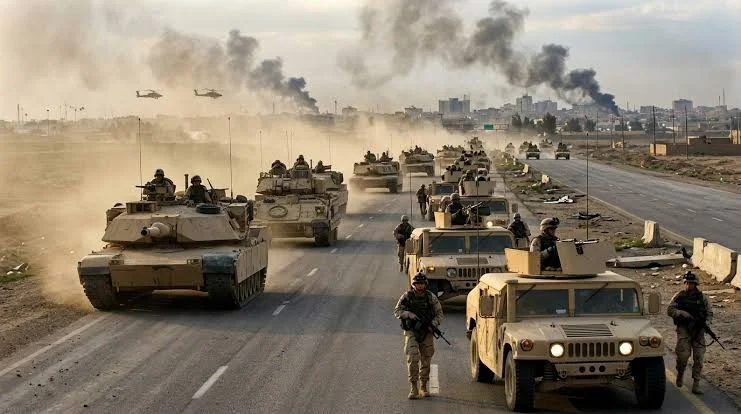
The United States has completed the withdrawal of its remaining military forces from Iraq, bringing an end to a presence that began with the 2003 invasion and continued, in different forms, for more than two decades.
The final departure was completed on September 30, 2026, under an agreement reached between Washington and Baghdad in 2024. Reuters reported that the withdrawal ends the remaining US military presence in Iraq after more than 23 years of war, counterinsurgency operations and the campaign against ISIS. �
Reuters +1
The moment represents one of the most significant changes to the Middle East security landscape in years.
For Iraq, it also begins a difficult new phase in which its own security forces carry primary responsibility for preventing an ISIS resurgence and managing powerful armed groups operating inside the country.
Why did US troops leave Iraq?
The withdrawal was not a sudden decision.
Washington and Baghdad agreed in 2024 on a process to wind down the US led coalition mission against ISIS.
Iraqi Prime Minister Ali al Zaidi later described September 30, 2026, as the fixed final date for the coalition mission and the departure of foreign forces.
A US official also confirmed before the deadline that Washington expected the withdrawal to be completed by September 30. �
Al Jazeera +1
American officials have said Iraqi forces are now expected to take the lead in counterterrorism operations inside the country.
The Pentagon previously said the transition reflected the progress made by Iraqi security forces and the Kurdish Peshmerga in combating ISIS. �
AP News
A military presence that began in 2003
The modern US military presence in Iraq began in March 2003, when American and allied forces invaded the country and removed Saddam Hussein from power.
At the peak of US counterinsurgency operations in 2007, more than 170,000 American troops were deployed in Iraq. �
Al Jazeera
The conflict became one of the defining foreign policy events of the early 21st century.
More than 4,500 American service members died during the years of conflict, according to Reuters. �
Reuters
US combat troops initially left Iraq in December 2011.
But the American military returned several years later after ISIS captured large areas of Iraq and Syria.
Why US troops returned in 2014
ISIS dramatically changed the security situation.
In 2014, the group seized Mosul and large areas of northern and western Iraq, declaring a self proclaimed caliphate across territory in Iraq and Syria.
The Iraqi government requested international assistance.
The United States subsequently led an international coalition that provided air power, intelligence, training and other military support to Iraqi forces and Kurdish fighters.
ISIS eventually lost control of the territory it had captured, although the organization was not completely eliminated.
Its remaining networks have continued operating through smaller cells and insurgent activity.
That is one reason the final US withdrawal is being closely watched.
Could ISIS return?
Iraqi security forces are considerably stronger than they were when ISIS swept through parts of the country in 2014.
However, security officials and analysts have warned that ISIS cells remain active.
Reuters reported concerns that the removal of US intelligence, surveillance and military support could create opportunities for militants to reorganize. �
Reuters
The issue is particularly sensitive because ISIS does not need to control major cities to pose a threat.
Small networks can conduct attacks, recruit members, move weapons and exploit security gaps.
Iraq will now have to maintain pressure on those networks with substantially less direct American military involvement inside the country.
What happens to the US relationship with Iraq?
The departure of troops does not mean diplomatic relations between Washington and Baghdad are ending.
Both governments have indicated that the relationship is expected to move toward economic, political and security cooperation without a permanent American military presence.
The Iraqi prime minister's office previously said relations would shift toward cooperation based on sovereignty and shared interests after the coalition mission ended. �
Al Jazeera
The transition therefore changes the nature of the relationship rather than eliminating it.
The United States retains significant diplomatic and economic interests in Iraq and across the wider Middle East.
Iran's influence is now under greater scrutiny
Another major question is how the withdrawal affects Iran's influence inside Iraq.
Iran has deep political, economic and security connections in the country.
Several powerful Iraqi armed groups have longstanding relationships with Tehran.
Reuters reported that Iran and allied groups have welcomed the US departure, while some Iraqi officials and analysts are concerned about how the country's internal balance of power could change. �
Reuters +1
The extent to which Iranian influence actually expands will depend on decisions made inside Iraq, including how Baghdad manages armed organizations and strengthens state institutions.
It is therefore too early to determine the long term political consequences of the American withdrawal.
Iraq faces the militia question
The future of armed groups operating outside traditional state command structures is another major issue.
Iraq's government has said that bringing weapons under state authority is an important part of the country's next phase.
Some militia organizations developed considerable military and political influence during the fight against ISIS.
Several became integrated into Iraq's broader security structures while retaining distinct leadership networks and political connections.
The Iraqi government now faces the challenge of maintaining security while strengthening centralized control over armed forces.
That issue has become even more important as foreign troops leave.
Kurdish leaders have raised concerns
The withdrawal is also being closely watched in Iraq's autonomous Kurdistan Region.
Kurdish forces played a major role in the campaign against ISIS and worked closely with the United States.
Some Kurdish officials have publicly expressed concern that the American departure could leave the region more exposed to security threats.
Kurdistan Regional Government Prime Minister Masrour Barzani recently criticized the withdrawal and raised concerns about the region's vulnerability, particularly amid broader tensions involving Iran. �
Financial Times
The Kurdistan Region must now navigate its relationships with Baghdad and neighboring states in a changed security environment.
Turkey is also reducing part of its presence
The American departure is occurring alongside another significant development.
Turkey recently agreed to gradually withdraw from the strategic Bashiqa military base in northern Iraq and transfer control to the Iraqi federal government.
The agreement followed discussions between Turkish President Recep Tayyip Erdogan and Iraqi Prime Minister Ali al Zaidi.
Turkey has maintained forces in northern Iraq as part of operations against the Kurdistan Workers' Party, known as the PKK.
The Bashiqa agreement does not mean all Turkish military activity in northern Iraq is ending, but it represents another change in the country's foreign military presence. �
AP News
September 30 marks a historic turning point
For Americans and Iraqis, the withdrawal closes a military chapter stretching across more than two decades.
The US presence survived multiple phases: the 2003 invasion, occupation, insurgency, sectarian violence, the 2011 withdrawal, the rise of ISIS and the return of American forces in 2014.
Now Iraq enters another period.
Its government has greater responsibility for national security, while Washington moves toward a relationship that does not depend on troops permanently stationed inside the country.
The most important questions will take time to answer.
Iraq must demonstrate that its security forces can contain ISIS, manage internal armed groups and protect the country's institutions while navigating competing regional interests.
For the United States, September 30, 2026, marks the end of one of its longest and most consequential military engagements of the modern era.



