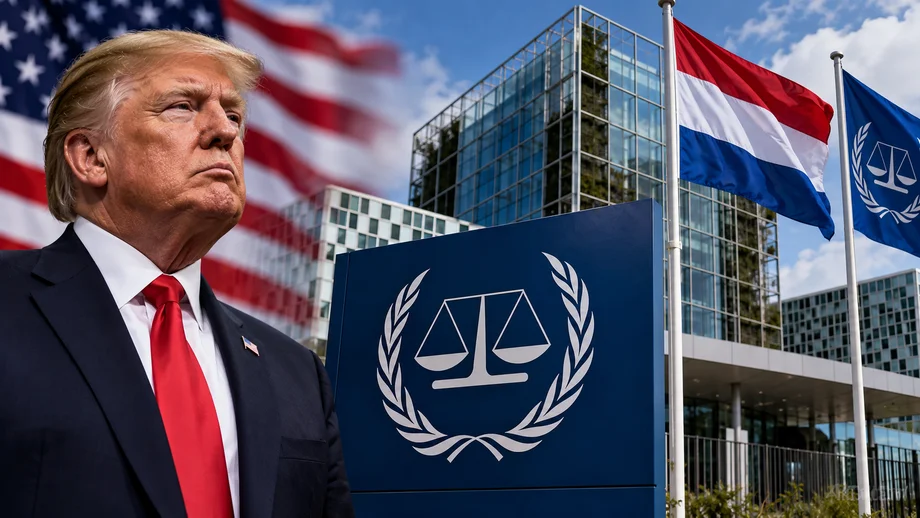
Relations between the United States and European allies are facing another diplomatic crisis after President Donald Trump's administration imposed widespread sanctions against the International Criminal Tribunal (ICC), with headquarters at The Hague in the Netherlands.
The Netherlands, the country that houses the international institution, has expressed serious concern about the consequences that American measures may have on the functioning of the tribunal and the international justice system.
According to German media T-Online, Dutch authorities are considering ways to protect the institution from the impact of sanctions that could affect banking services, technology and daily operations.
The decision was announced on October 9th by US Secretary of State Marco Rubio, who accused the court of overstepping its competencies and taking unacceptable action against American citizens and Washington allies.
According to the Associated Press, sanctions aim to limit financial transactions and court relations with American companies. This could create serious difficulties in paying salaries, using technological systems and financing international investigations.
However, the measures will not be implemented immediately. The US administration has predicted a six-month period, until April 2027, leaving room for diplomatic negotiations.
Dutch Prime Minister Rob Jetten has described the American decision as extremely disturbing, warning that pressure on the court may also affect relations between the United States and Europe.
Dutch Foreign Minister Tom Berendsen said his country would continue to protect the institution's independence and functioning.
According to the Dutch government's official statement, the six-month period should be used for dialogue with Washington and for co-ordination with the states supporting the tribunal.
Reactions are not limited to the Netherlands.
Reuters reports that the foreign ministers of Germany, France, Great Britain, Italy, Denmark, Canada, Japan and the Netherlands have jointly rejected American sanctions.
Even the European Commission has warned that the European Union is willing to take measures to ensure that the tribunal's work continues.
One of the possibilities discussed is the use of the European mechanism for blocking the effects of foreign sanctions, which can provide protection to European companies that co-operate with the institution.
The conflict mainly relates to American opposition to the jurisdiction of the International Criminal Court, especially after investigations that have included American forces' actions in Afghanistan and warrants issued against Israeli Prime Minister Benjamin Netanyahu over the war in Gaza.
The United States and Israel are not members of the court and oppose exercising its jurisdiction over their citizens in these cases.
On the other hand, the court insists its mandate stems from international law and that investigations should be conducted without political interference.
Court President Tomoko Akane has declared that the institution will continue to fulfil its duties independently and impartially.
According to Reuters, UN Secretary General Antónnio Guterres has also condemned the American verdict, considering it a serious blow to international criminal justice.
The next months are expected to be crucial to the institution's future. If negotiations fail, sanctions could cause major financial and operational obstacles, turning the clash between Washington and The Hague into one of the most serious diplomatic conflicts for international justice.



