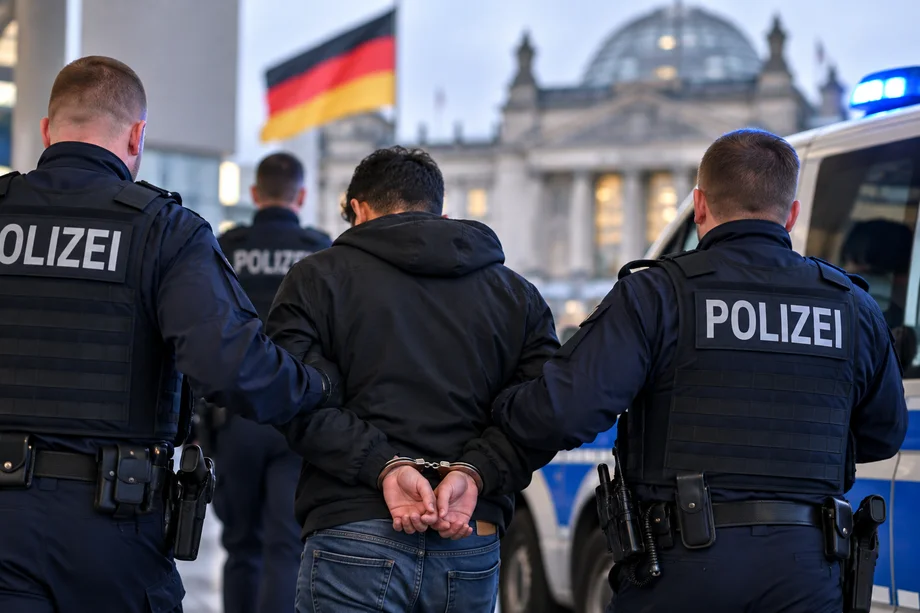
B ERLIN naught more than 148 thousand people come in search of arrest warrants in Germany, while 87.3 percent of them have no German citizenship. The figures released by the Federal Interior Ministry (Bundesinemin administration) have prompted strong political reactions regarding security, migration and border controls.
According to the German newspaper BILD, which refers to data provided by W ELT am Sonntag, only 16,671 people in this statistics have exclusively German citizenship. Another 1.5 percent have a German passport along with another citizenship.
Of the foreign citizens wanted by German authorities, the largest groups identified are Romanians with 16,123 persons, Poles with 12,721, Georgians with 6,869 and Turkish citizens with 6,696 persons.
Statistics include citizens from Bulgaria, Albania, Algeria, Ukraine, and Morocco.
The data refers to July 1, 2026. According to the German agency's report, they represent persons against whom at least an open warrant exists and should not be confused with the number of individual warrants.
The publication has caused clashes among parties in Bundestag. Alternative MP für Deutschland ( AfD), Sebastian Münzenmaier, whose parliamentary request the figures were released, considers the situation evidence of German migration policy failure.
It requires stricter controls on German borders, the expulsion of foreign citizens who commit criminal acts and the implementation of prison sentences in countries of origin.
Even Alexander Throm, spokesman for parliamentary group's internal policy CDU/ CSU has requested stronger measures. According to him, since the return of border controls in September 2024, authorities have detained over 17,500 persons against whom open warrants existed.
Meanwhile, Marcel Emmeritch from the Green Party requires police to focus on the perpetrators of violent crimes, extremists and people who pose concrete risks, rather than the arrests largely depend on random border controls.
The Die Linke party warns against general interpretations of statistics. MP Clara Bünger points out that part of the arrest warrants are linked to unpaid fines, including ticket-free travel cases in public transportation.
Problems with police personnel are another concern. Heiko Teggatz, director of the Deutsche Polizegewerkschaft union, says German country police often do not have enough capacity for systematic search by arrest order.
Professor of criminal law Michael Sainé from Europe-Universität Viadrina warns that the number of arrest warrants does not automatically indicate the level of risk. It should be known for what criminal acts are required.
The debate is expected to continue in German politics, where migration issues, internal security and the expulsion of convicted persons remain important topics for the federal government and parties in Bundestag.



