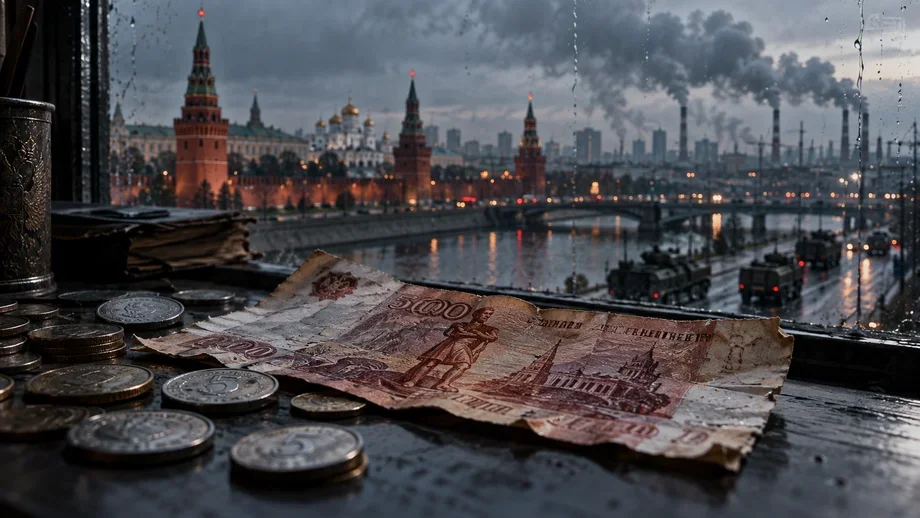
The main promise is for the deficit next year to be 2.2 percent of GDP, about 5.5 trillion rubles (49 billion pounds), of approximately 3 percent expected this year. Budget revenues are projected to increase by 7.5 percent, which, after inflation is considered, is barely 1 percent. Expenses will increase by less than 6 percent, which in real terms means a reduction of about 1 percent. For the first time since the invasion of Ukraine, the government even plans to start replenishing the country's National Union Fund for hard times. Two-thirds of this fund has already been spent to keep the Russian war economy standing.
It all sounds to be commended as prudent financial policy and so it would be if someone believed it. The Finance Ministry's plan assumes the economy will grow by 1.4 per cent next year. Central Bank expects 1.2 percent growth, while O ECD only 0.5 percent. The ministry also assumes that inflation will drop from 6.8 per cent at the end of this year to the 4 per cent target by the end of 2027. The average Russians, who view prices in stores every day, think differently. They expect prices to rise by 14.2 percent over the next year and appreciate that the prices they pay are now rising at a rate of 15.1 percent. Only the forecast for the price of oil is careful. But the rule that once linked expenses with oil revenues has been suspended until 2029, giving the government space to spend more freely.
Two things will determine how this budget actually will turn out, and the Kremlin prefers not to talk about either. The first is what war in Ukraine really costs. The second is whether the government intends to stick to its figures. On the first issue, Finance Minister Anton Siluanov has at least been sincere about the government's priorities. The defence comes first, along with social payments that help preserve population calm: weapons, factory modernisation, salaries for soldiers and money for their families. How much money is spent precisely and for what, no one outside a narrow circle knows, as in previous years much of this spending will remain secret. The published figures should be seen as initial bids in negotiations between the Ministry of Finance and Army generals. Generals rarely lose in front of technocrats.
As to whether the government will adhere to its figures, the past speaks for itself. Moscow has not met any targets for the deficit since the invasion. Last year, he promised a deficit of 0.5 percent of GDP and closed the year by 2.6 percent. This year's target of 1.6 percent had been exceeded since February; by the end of the year, the deficit is expected to reach about 3 percent.
A year ago, the ministry announced it would cut military spending in 2026; it will almost certainly end the year by spending more. A plan to cut by one-tenth of sensitive «spending was set aside when the Iran war significantly raised the price of oil. Even that sudden profit was largely dissolved, eroded by hard ruby and payments to oil companies, aiming to keep gasoline on the domestic market.
Who, then, is this budget really for? First of all, for the Russian central bank. Interest rates remain painfully high, and the Kremlin wants them to land. The central bank has said it needs fiscal discipline first, and the budget offers that exactly on paper. This would give the Russian Bank space to resume lowering rates. But if accounts go wrong, as has happened before, the rates will remain high for longer.
In the meantime, someone has to pay the bill. After already increasing income tax, company profit tax and VAT, the government is now demanding money from even less visible sources. Revenues from savings and investments will be taxed according to the highest progressive degree; war veterans, of course, will be excluded. Mining companies and chemical waste producers, among the few still making good abroad, face a once-in-a-life tax on extraordinary profits ) hardly an incentive to invest. Investors from <x0 non-friendly countries» tax on their blocked divides would be more than doubled. Online shopping from abroad will cost more, like smoking and alcohol, while municipal utility bills will increase faster than planned. However, doubts remain whether the deficit and debt will remain within the limits envisioned by the Ministry of Finance.
To be honest, by Western standards, none of this looks bad. A deficit of about 2 percent of GDP would be to envy in Washington, London or Paris. Russia's public debt is less than a fifth of GDP. America's is about 126 percent, France's about 118 percent, and Britain's nearly 100 percent. Japan's debt is over 200 percent, yet investors have not yet left its bond market.
The difference lies in those who lend and use money. Western governments borrow from around the world. Russia, excluded from international markets, can borrow only from its banks and at two-sided interest rates. Money does not go for roads, factories, schools or hospitals. They go for shells and fear, they don't produce anything anyone can buy. Hence, these costs do not increase the productivity or potential of the economy. More money competing for the same goods means higher prices. Higher prices keep interest rates high. High rates drive civil businesses that cannot rely on state orders and subsidies, while the defence sector continues working despite them. With each rotation of this cycle, it expands the gap between two parts of the economy - military and civilian.
Inflation is the real tax this war is being paid. Initially it hit the urban middle layer, people with lost savings, who are now the main target of the new investment income tax. But now the burden is spreading to all. Major war costs have increased real income by almost 7 percent a year over the past three years, more than twice the pace of growth. That period is over. Real income is expected to increase by only 1 percent this year and 1.4 percent next year. The gap between those who benefit from war and those who simply pay it will continue to expand.
This proposed fiscal austerity does not solve the problems facing the Russian government. It only postpones them for another year, hoping that the war will end, the price of oil will recover, or Washington will ease its stance before the time comes to pay the bill. Each year, it leaves Russia with fewer reserves, more expensive debt, heavier taxes, and less opportunities to deal with the next blow. If the war escalates this winter, as it seems possible, these figures will be dropped until spring, as they did in the past two years.
Russian economy, of course, is not falling apart. But it's rotting slowly. Vladimir Putin is holding Russia's future hostage to pay off his current geopolitical goals. The new budget does not change this agreement, he simply adds monthly installments to the country.
Alexander Kolyander is director in Eurasia Group, dealing with Russia's politics and economy, Ukraine and the wider Eurasian region. He used to be a reporter for The Wall Street Journal and a banker at Credit Suisse. Born in Harkiv, Ukraine, lives in London.



