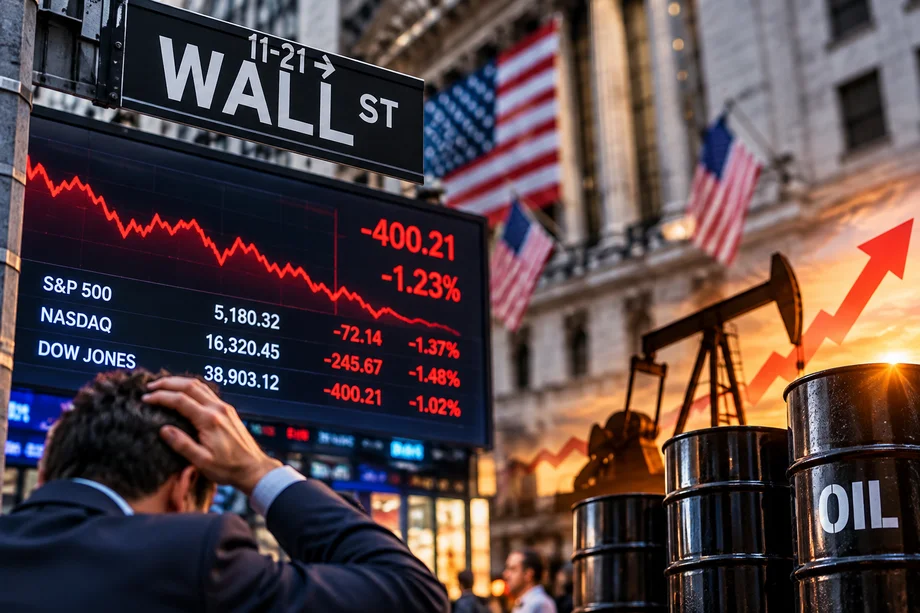
Stock markets in the United States launched trade on Thursday, October 8th, while oil prices rose significantly and borrowing costs reached levels that had not been seen for more than two decades.
According to Reuters, the Dow Jones Industrial Overage index dropped 178 points, or 0.35%, at the opening of the market. S&P 500 lost 0.37%, while Nasdaq Compose fell by 0.49%.
The fall came after another negative day on Wall Street, halting the positive performance that had led some American indexes to record levels.
Trump statements add uncertainty
According to Investor's Business Daily, investors reacted to US President Donald Trump's statements concerning Iran, which increased concerns about a possible escalation of the conflict.
Reports of the possibility of new American military operations in Iran also affected energy markets.
American oil West Texas Intermediate was traded about $99 per barrel during the morning, while Brent oil exceeded $100.
According to the Associated Press, price hikes were also prompted by concerns about maritime transport safety and energy supplies to the Middle East.
Why are investors worried?
The rise in oil prices could affect the cost of transportation, production and consumer goods.
This poses a danger to new inflationary pressures, just during a time when the U.S. Federal Reserve is trying to keep inflation under control.
Reuters reports that Wield's ten-year bonds of the American Treasury rose around 5.3%, near the highest levels in 24 years.
When the bonds are grown, borrowing can become more expensive for businesses and families, while stocks become less attractive to some investors.
The Federal Reserve Faces Difficult Decisions
According to Reuters, the September Federal Reserve meeting procession showed that American officials continue to worry about inflation.
Fed Governor Christopher Waller signaled that further interest rates may be needed to turn inflation towards the 2% target.
However, he stressed that flexibility exists for the pace of future changes.
The prospect of higher interest rates could exert pressure on the real estate market, companies' loans and investments.
What could happen next?
Investors are carefully following developments in the Middle East, energy prices and future signals from the Federal Reserve.
Another important test will be the season of US company financial results.
According to Reuters, investors seek to understand whether corporate profits can continue to increase despite higher costs of financing and economic uncertainty.
For consumers, the potential impact is not limited to stock markets. If energy prices stay high for a long time, the pressure may also be felt on fuel, transportation, and prices of daily products.
The future direction of Wall Street will depend on geopolitical developments, inflation and the decisions of the American central bank.



