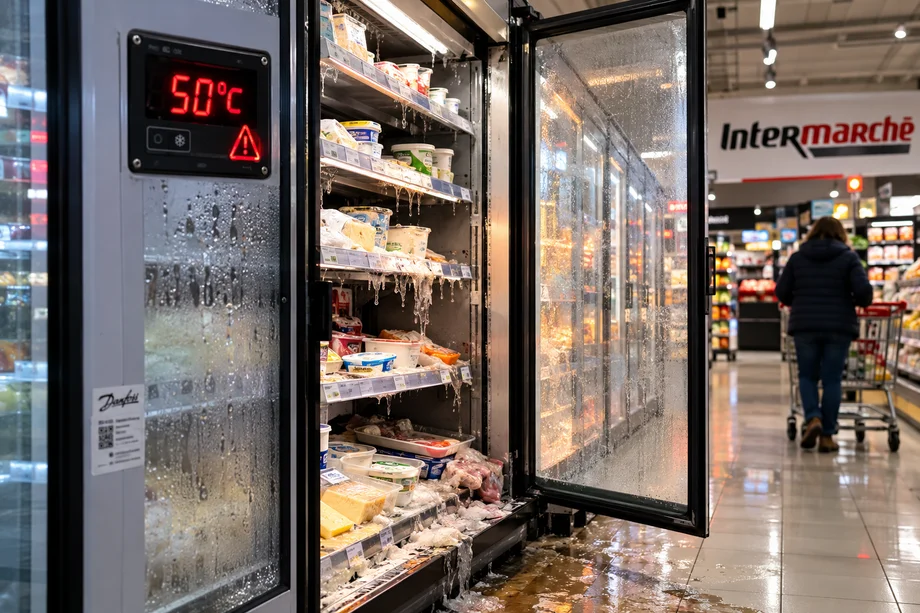
An unprecedented cyberceden attack has hit hundreds of supermarkets in France, enabling hackers to take control of cooling systems and increase refrigerator temperatures to 50 degrees Celsius.
According to Reuters and The Guardian, the attack occurred during the night between Sunday and Monday on October 12th, affecting the large trade chains Intermarché and Cooperative U.
About 150 to 200 shops of Intermarché and nearly 100 Copérative units were affected by the incident. Other known chains, including E, are reported. Leclerc, they may have been hit.
The hackers managed to intervene from distance to electronic systems that control the temperature of refrigerators and freezers, triggering their melting process.
At some supermarkets, temperatures reached up to 50 degrees per six hours, destroying fresh, frozen products.
Intermarché representatives confirmed that the affected shops were forced to drop all foods required to keep them at a controlled temperature to avoid the risks to consumer health.
The Paris prosecution has launched investigations, confirming that the attack has caused food losses and fire incidents.
French Prime Minister Sébastien LeCornu has directed the National Cyber Security Agency, ANSSI, investigate the incident.
According to Reuters, initial investigations have identified a vulnerability to the software of Danish company Danfos, which supplies cooling control systems.
Danfos has confirmed that the affected devices used outdated software versions and emphasised the importance of security updates.
Concerns have expanded beyond France. Dutch company Ahold Delhaize has reported security problems on its network, though it has not yet been confirmed whether the incidents are related.
French authorities are co-operating with other European countries to determine the size of the attack and identify those responsible.
The event has raised concerns about the safety of food infrastructure in Europe, showing that cyber attacks do not only endanger digital data, but can also cause direct physical and economic damage.