The American economy is entering an important week, with the publication of inflation data that could influence financial markets, loans and decisions of the Federal Reserve.
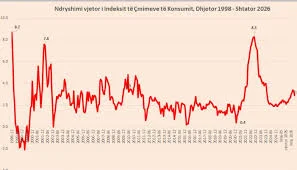
According to the Financial Times, economists expect annual inflation in the United States to reach about 3.7 per cent for the month of September, mainly due to high energy prices.
Basic inflation, which excludes food and energy, is projected to be approximately 2.5 percent.
These are analysts' assessments and not the final results of official statistics.
Oil prices have remained high as a result of tensions in the Middle East, directly affecting transport, production and consumer goods costs.
According to the Financial Times, Federal Reserve officials are showing caution before future monetary policy changes. Financial markets estimate that an increase in interest rates in October remain relatively unlikely.
However, higher inflation from expectations could change investors' accounts.
Interest rates directly affect mortgage loans, business financing and household consumption. Keeping them at high levels could slow economic activity.
Uncertainty is not limited to the United States. Even European economies are facing higher energy and financing costs, while China continues to struggle with weak domestic demand.
Future US data will be closely followed even in international stock markets, currency and bonds.



