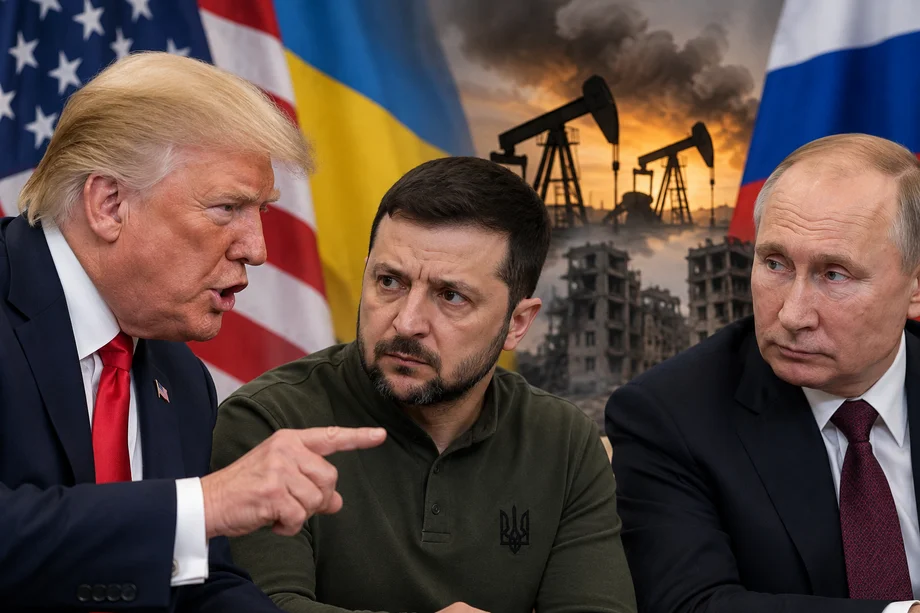
A new deal between the United States and Russia on diesel supplies has caused new diplomatic tensions, raising questions about the future of US support for Ukraine.
According to the Polish newspaper Dziennik newspaper Prawna, concern has increased in Ukraine following US President Donald Trump's decision to temporarily ease sanctions on Russian fuels.
The deal, announced after a telephone conversation between Trump and Russian President Vladimir Putin, aims to increase the supply of diesel markets and lower fuel prices.
The Reuters agency reports that increased dysel prices have become a political problem for the American administration, especially prior to the November middle-rate elections.
In Kiev, however, the decision is being seen with concern.
Ukrainian President Voldymyr Zelensky has criticised easing sanctions, arguing that additional revenues from energy exports could give Russia more resources to continue the war.
According to Reuters, Zelensky has named the agreement a decision that weakens economic pressure on Moscow, without offering concrete guarantees for the end of the conflict.
Tensions escalated further when Trump criticised Ukrainian attacks on Russian oil refinerys.
The American president argued that shocks to energy objects are contributing to rising fuel prices and urged Kiev to stop them.
Trump went further, claiming Ukraine must have a new president, a comment that prompted immediate reactions by Ukrainian officials.
Ukrainian Foreign Minister Andri Syhbiza defended Zelensky's legitimacy and stressed that the country's leadership's choice belongs to Ukrainian citizens.
Zelensky, meanwhile, has proposed a bilateral agreement on preventing attacks on energy infrastructure.
According to Reuters, he declared on October 11th that Ukraine is ready to terminate attacks on Russian refinerys if Moscow bans bombings on Ukrainian energy objects.
This proposal aims to establish a bilateral deespass mechanism, but so far there is no confirmed agreement between the parties.
Trump's decision has caused controversy even within the United States.
Former US Vice President Mike Pence has criticised the easing of sanctions, while lawmakers from both parties have voiced concern that the deal could weaken international pressure on Russia.
In Europe, Estonia's prime minister, Christen Michigan, has called for increased support for Ukraine, arguing that revenues from Russian energy exports continue to matter for war financing.
According to Dziennik newspaper Prawna, recent developments have also prompted discussions on the future of security co-operation between Washington and Kiev, including exchange of intelligence information.
However, there is no confirmation that the United States has imposed new restrictions on support of intelligence for Ukraine.
At the moment, the fuel deal has opened another international debate: whether efforts to lower energy prices can be realised without weakening sanctions intended to limit Russia's ability to finance the war.
As fighting continues, relations between Washington, Kiev and Moscow are facing a new diplomatic test.



