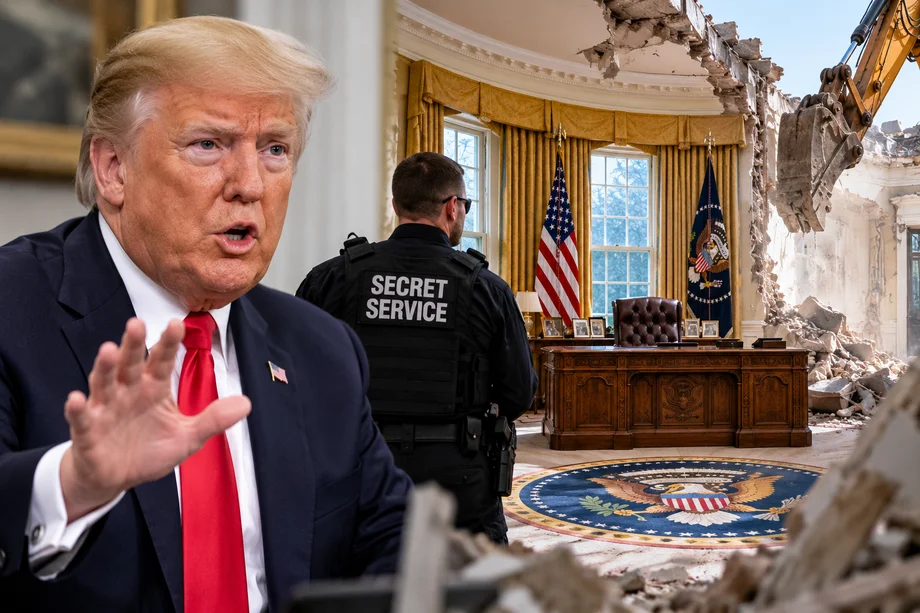
President Donald Trump says the U.S. Secret Service wanted him to consider tearing down the Oval Office and replacing it with a new, more secure version.
Trump disclosed the proposal during an interview with Time magazine, according to The Washington Post, which reported the comments on October 1.
The claim immediately drew attention because the Oval Office is one of the most recognizable rooms in American government and has served as the symbolic center of presidential power for generations.
Trump said he rejected the idea.
According to his account, security officials suggested that the existing Oval Office could be replaced with a new structure designed to provide greater protection for the president.
Trump says he refused the proposal
Trump told Time that the Secret Service wanted a substantially different approach to Oval Office security.
"They want me to take down the Oval Office," Trump said, according to The Washington Post.
Trump said he opposed the idea because of the historical significance of the room.
The Washington Post reported that previous administrations have also faced recommendations to strengthen security around the Oval Office, but major changes were rejected because of the disruption and the building's historic importance.
The modern Oval Office dates to the presidency of Franklin D. Roosevelt, although the White House itself has undergone numerous renovations and structural changes during its history.
White House is already undergoing major changes
The revelation comes as Trump oversees significant construction and renovation projects across the White House complex.
One of the most dramatic changes has been the demolition of the East Wing as part of plans for a large new White House ballroom.
Demolition began in October 2025. At the time, the administration said plans for the ballroom would be submitted for federal review. Reuters reported that the project was initially valued at about $250 million.
The East Wing demolition generated debate among preservation groups, architects and political figures about how major changes to the historic White House should be reviewed.
Trump has also highlighted other changes to the grounds, including a new helipad on the South Lawn.
Time reported that the new helipad covers about 80,000 square feet and uses carved granite imported from Italy.
Another major security project is moving forward
The Oval Office proposal is not the only security related construction being considered at the White House.
A new visitor screening center on the eastern side of the White House grounds is moving through the federal approval process.
The project has been requested by the Secret Service and is intended to replace temporary facilities currently used to process visitors.
The Secret Service says the planned center would strengthen security by incorporating newer protective technology.
Officials hope the visitor facility can be completed by July 2028, according to The Washington Post. The administration has not publicly disclosed its expected cost.
Could the Oval Office actually be demolished?
Trump's comments describe a proposal that he says he rejected, not an approved demolition plan.
There is currently no indication that the Oval Office is scheduled to be torn down.
The episode nevertheless highlights the challenge of balancing presidential security with preservation of one of America's most historically significant buildings.
The White House has been repeatedly modified since construction began in the 18th century. The building was reconstructed after being burned by British forces in 1814 and underwent extensive structural reconstruction during Harry Truman's presidency.
The Oval Office itself has also changed over time, with presidents regularly replacing furniture, carpets, artwork and other decorative elements.
Replacing the room itself, however, would represent a much more significant alteration.
Trump considers protecting the room
Trump has also discussed seeking federal landmark protection connected to the Oval Office and changes he has made there, according to The Washington Post.
Such a designation would raise complicated questions because the White House occupies a unique position under federal preservation and construction rules.
For now, Trump's position appears clear: despite supporting extensive construction elsewhere on the White House grounds, he says the Oval Office itself should remain.
The disclosure has placed the world's most famous presidential office back in the spotlight, not because demolition is about to begin, but because the possibility was apparently discussed at the highest levels of presidential security.



