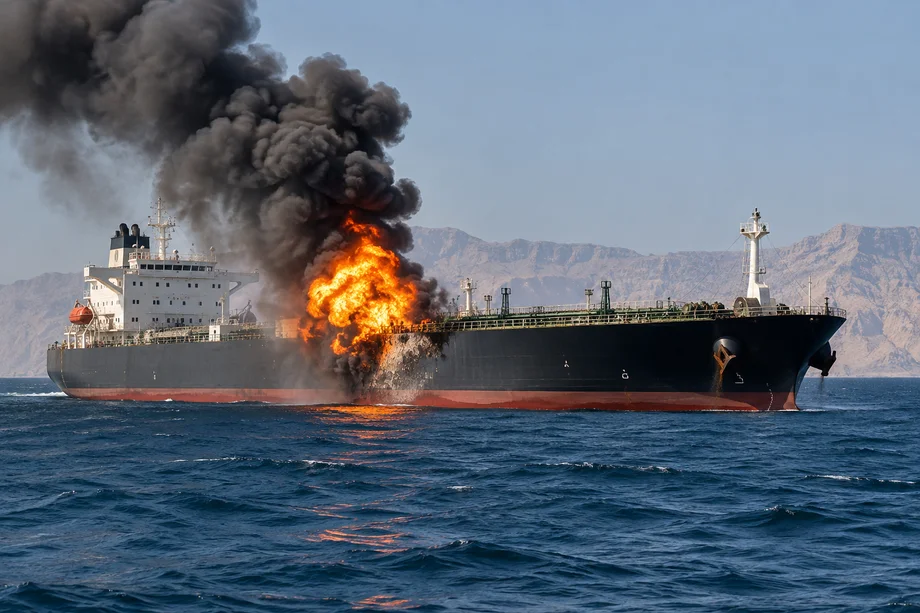
A commercial tanker was struck by a projectile while passing through the Strait of Hormuz on Tuesday, injuring 12 crew members and adding fresh pressure to one of the world's most important energy corridors.
India's Ministry of External Affairs confirmed that the Panama flagged MT On Peace was attacked off the coast of Oman. The vessel was carrying 19 crew members, including 17 Indian nationals. Eleven Indians were among the 12 people injured.
The injured sailors were evacuated with assistance from Omani authorities and taken for medical treatment in Khasab, Oman, according to Indian officials.
India condemned the attack and called for an immediate end to assaults on civilian shipping, warning that the continuing incidents are a serious threat to maritime security and regional stability.
The latest strike comes as attacks on vessels around the Strait of Hormuz accelerate. UK Maritime Trade Operations has recorded nine attacks in the waterway so far this month, according to Bloomberg reporting carried by NDTV Profit.
The security deterioration is particularly significant because energy shipments through the region have recently begun recovering. Reuters reported that Middle Eastern crude exports exceeded levels seen before the conflict on several days in September, even as attacks on tankers increased.
Gulf oil exports excluding Iran averaged about 19.2 million barrels per day in September, reaching more than 81 percent of levels recorded before the war, according to data reported by Reuters. Saudi Arabia has played a major role in the recovery, including through increased use of its East West Pipeline to move crude toward the Red Sea.
But the latest attack highlights how fragile that recovery remains.
The Strait of Hormuz is one of the world's most strategically important maritime passages. Roughly one fifth of global oil and liquefied natural gas supplies traditionally pass through the waterway, meaning disruptions can quickly affect shipping costs, fuel markets and energy prices far beyond the Middle East.
The US Energy Information Administration on Tuesday raised its oil price forecasts for 2026 and 2027, citing declining global inventories, tight diesel supplies and continuing disruption linked to the conflict with Iran. The agency now expects Brent crude to average about $105 a barrel during the fourth quarter of 2026.
For energy markets, Tuesday's tanker attack underscores the central risk: oil flows through the Gulf may be recovering, but the ships carrying those supplies remain exposed to escalating violence.



