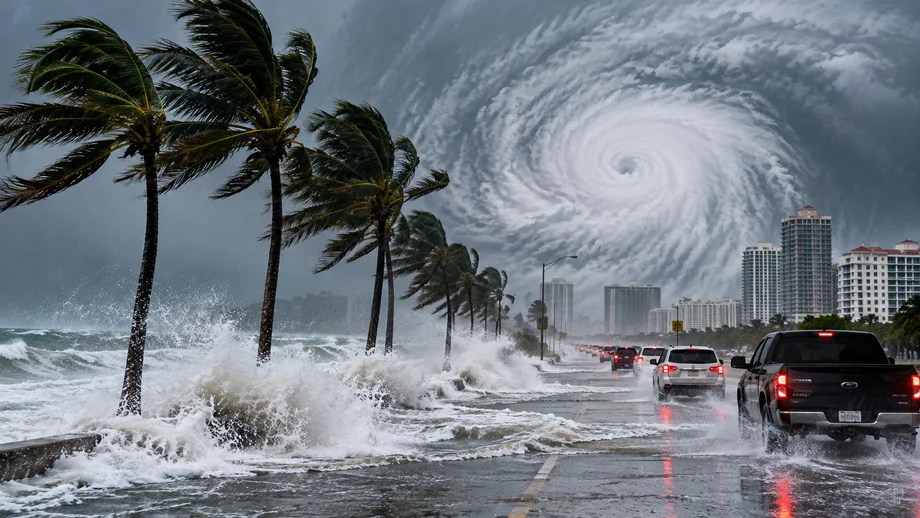
Millions of residents in the south of the United States are on alert as Hurricane Isaiah grows stronger in the Gulf of Mexico and moves toward the American coast.
According to the National Centre of Uranus (NHC), Isaiahs has reached the second category, with stable winds of about 100 miles per hour [160 km]. The storm is expected to hit the northern Gulf coast of Mexico late Friday, October 9th, or early Saturday.
The Associated Press reports that the most endangered areas include the northwest part of Florida, the South of Alabama and the Mississippi coast.
NHC Director Michael Brenan has warned that Isaiah could be a dangerous hurricane when he reaches land, urging residents to complete preparations and move to safe places.
Authorities have warned that the water level along the coast could increase by about 1.5 to 2.1m above normal level, creating serious risks for communities near the sea.
According to the Associated Press, up to 380 millimeters of rain may fall in some areas, amount that can cause immediate flooding and landslides.
Governors of Florida, Alabama, and Georgia have declared a state of emergency to prepare for the impact of the storm.
In Alabama, authorities have ordered the evacuation of visitors from several coastal resorts, including Gulf Shores and Orange Beach. Meanwhile, evacuations in low coastal communities have been ordered in Florida, and some schools have suspended learning.
According to The Guardian, warnings of powerful winds, floods and dangerous sea-level rise extend along a considerable part of the southern American coast.
The danger does not end with the arrival of the hurricane on earth. Meteorologists warn that heavy rainfall may continue over the weekend, affecting even more countries in the north, including Tennessee and North Carolina.
The Tornado has also begun to influence the American energy sector.
Reuters reports that Shell and Chevron companies have evacuated employees and have stopped operations on several oil platforms in the Gulf of Mexico.
Production cuts have raised concerns about power supply and fuel prices, especially if the storm undermines refining and transport infrastructure.
Isaiah is the first hurricane of the 2026 Atlantic season, an unusual development for this period of year.
US authorities call on residents in the endangered areas to follow official warnings and not wait until the last moment to evacuate.
Forecasts may change as the hurricane approaches the earth. Official updates are published by the National Bridge Center on the nhc.noa.gov page.



