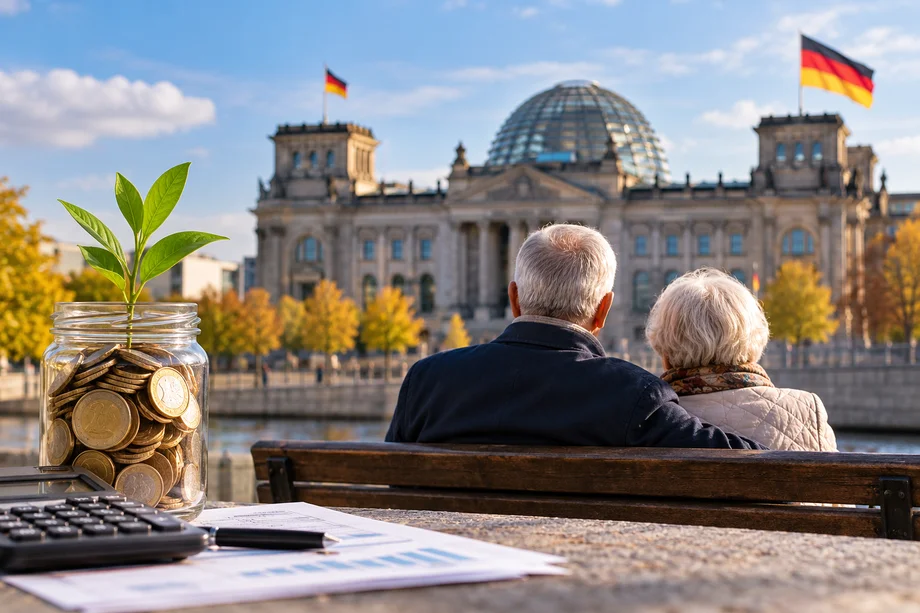
Germany’s retirement age has become a major topic again as politicians and experts debate how the country should adapt its pension system to an ageing population.
Search interest for “Rentenalter,” the German term for retirement age, surged on Google on Monday as attention turned to proposals that could affect both the standard retirement age and options for leaving work earlier.
One of the most important proposals comes from Germany’s government appointed pension commission.
According to Germany’s Federal Ministry of Labour and Social Affairs, the commission recommends gradually linking the statutory retirement age to increases in life expectancy after 2031.
Under current demographic assumptions, this could see the standard retirement age rise from 67 to around 67 years and six months between 2031 and 2041. The proposal does not mean Germany has already approved a sudden increase to 70.
Another politically sensitive issue concerns early retirement.
The commission has recommended abolishing the possibility of receiving a full pension after 45 years of contributions under the current special arrangement. It also proposes increasing the earliest retirement age for long term insured workers from 63 to 64.
The proposals have triggered significant political resistance.
Recent German media reports show disagreement within the governing parties over how far the reform should go. Some politicians argue that people who have worked and paid contributions for decades should retain the possibility of retiring earlier without financial penalties. Others say the existing system is becoming increasingly difficult to finance as Germany’s population ages.
The demographic pressure is substantial.
The Deutsche Bundesbank says Germany faces a growing imbalance as large numbers of baby boomers retire while fewer workers remain to finance pensions and social security. The central bank has argued that longer working lives could help support the labour market and reduce pressure on public finances.
Bundesbank data also show that around 269,000 people used the pension option available after 45 contribution years in 2024, representing roughly 29 percent of new old age pension recipients that year.
For workers, however, the most important point is that the debate remains politically contested.
Germany is already gradually increasing its statutory retirement age under existing rules. For people born in 1964 or later, the regular retirement age reaches 67. Any additional increase after 2031 would depend on future legislation and the final shape of the pension reform.
With negotiations continuing, retirement age is likely to remain one of Germany’s most closely watched economic and political issues.



