High-income employees in Germany must prepare for greater social contributions from January 1st, 2017, following a decision adopted by the federal cabinet Wednesday.
Deutschlandfunk reports that the government approved the rise of so-called Beatragsbemesungsgrenze, the maximum wage limit over which contributions for social insurance are calculated.
The biggest change will be in public health insurance.
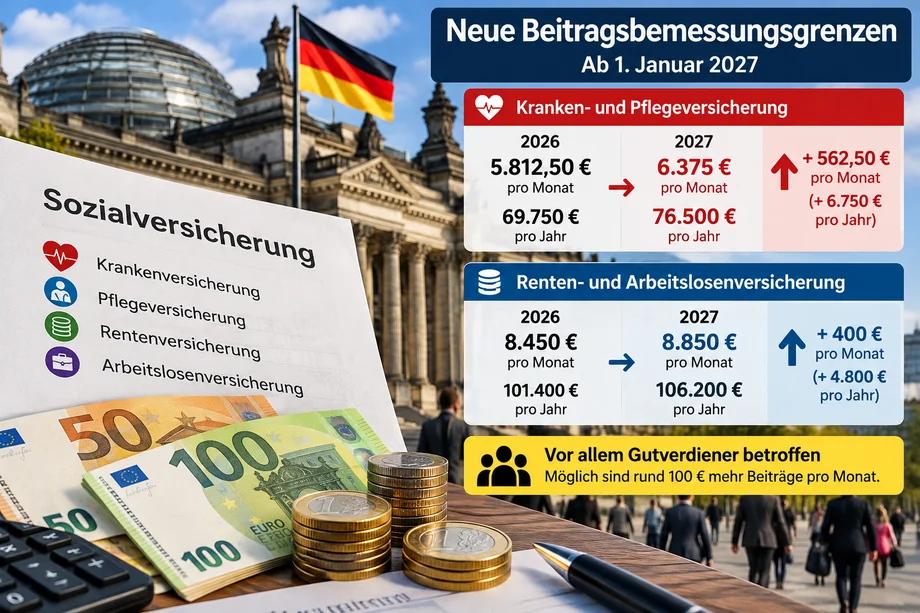
According to the Federal Ministry of Labour and Social Affairs, BMAS, the monthly health and long-term care limit will increase from 5,812.50 euros to 2026 to 6,375 euros in 2027. At the annual level, the border rises from 69,750 to 76,500 euros.
Even the limit to pension and unemployment will change. It will rise from 8,450 to 8,850 euros per month, either from 101,400 to 106,200 euros annually.
For employees who earn over these boundaries, the effect will be directly felt on net wages.
Deutschlandfunk reports that an employee with income over the new borders may face an increase of nearly 102 euros per month if contributions rates remain unchanged. For childless people, the amount may be even higher because of the additional contribution to care insurance.
However, the change does not affect most of the workers in Germany. BMAS explains that rising borders affect only people with enough income, while for the vast majority of the security, nothing changes.
The government argues that growth relates to wage development. The gross wages for employees in Germany rose by 4.38% during 2025, the figure on which new parameters were calculated for 2017.
There is also a remarkable change for health insurance. In addition to normal adjustments with salaries, the border will increase by an additional 300 euros per month, as part of measures to strengthen public health system finances.
The cabinet's decision is not yet the final step. The German federal government announces that the regulation should also receive Bundesrat's approval before it goes into effect.



