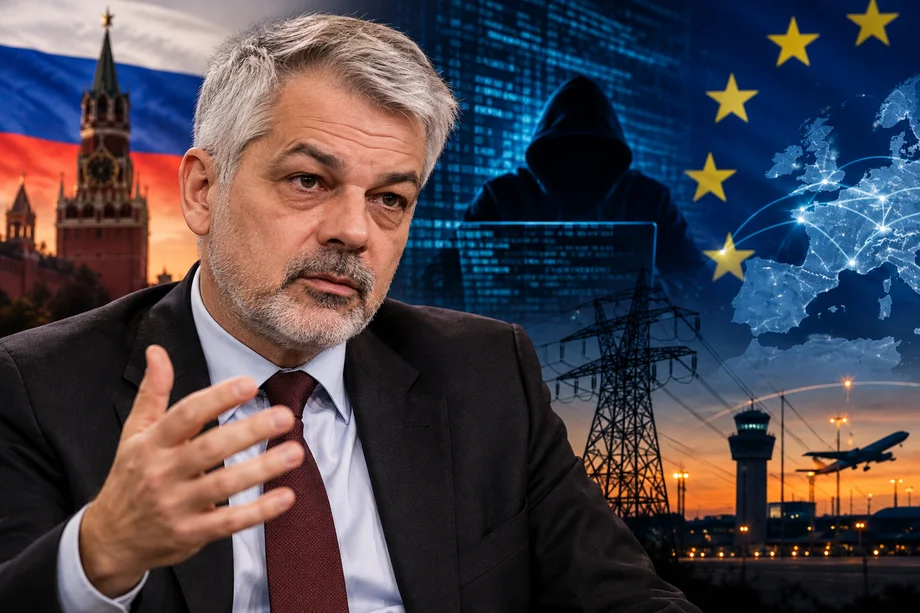
German security expert Carlo Masala has warned that Russia's confrontation with Europe is increasingly taking place outside the traditional battlefield, through sabotage, espionage, cyber operations and disinformation.
Masala, professor of international politics at the Bundeswehr University Munich, described the situation as a "shadow war" in an interview published by German newspaper Die Zeit on October 1.
His comments come amid heightened concern in Germany and other European countries about suspected hybrid operations linked to Russia.
Masala says Europe faces a hidden conflict
Masala argued that Russia is already conducting hostile activities against Western states, although these actions remain below the threshold of conventional warfare.
He pointed to espionage, disinformation and attempted sabotage as examples.
According to Masala, one objective of such operations is to create insecurity inside European societies and weaken Western support for Ukraine.
European governments have increasingly focused on this type of threat. Recent German reporting has highlighted drone incidents, suspected sabotage and threats to critical infrastructure as areas of growing concern.
A controversial idea for responding to Moscow
Masala went further than calling for additional sanctions.
He suggested that intelligence agencies from allied countries could coordinate stronger measures designed to demonstrate that Moscow would also face consequences from continued hybrid activity.
"Auch wir können einen hybriden Krieg führen," Masala told Die Zeit, meaning that Western countries could signal that they too are capable of conducting hybrid operations.
Masala presented the idea as a possible deterrent rather than describing an existing German or NATO policy.
There is no indication that Germany or NATO has adopted the specific measures he discussed.
Cyber operations could be part of the response
When asked what such a response might look like, Masala referred to a scenario involving disruption inside major Russian cities.
He suggested that cyber operations affecting access to cash in Moscow and St. Petersburg could illustrate the type of pressure he had in mind.
His argument is that Russia should understand that continued covert operations against European countries could carry direct consequences.
Masala warned that without meaningful responses, Russian operations could become increasingly willing to take risks.
Europe is strengthening defenses
The wider debate comes as European governments and NATO members expand preparations against hybrid threats.
Germany and its European partners have been examining stronger protection for airports, energy infrastructure, communications networks and other critical systems.
NATO has also strengthened security on its eastern flank, while European governments are developing greater capabilities to detect drones and respond to cyberattacks and sabotage.
The European Union has separately imposed restrictive measures against individuals and organizations accused of involvement in Russian destabilization activities.
Masala sees conventional NATO attack as unlikely for now
Despite his warning about hybrid warfare, Masala drew an important distinction between covert operations and a direct Russian military attack on NATO territory.
He said the current risk of Russia attempting to seize territory in a NATO country, including in the Baltic region, remains very low.
His reasoning is that Moscow would have to expect a collective NATO response to such an attack.
That makes operations below the threshold of conventional war particularly important in the European security debate.
Germany has become a key focus
Masala has previously argued that Germany faces particular pressure because of its role in European support for Ukraine.
In an August interview with Le Monde, he said Germany had become a target because it is a major pillar of European assistance to Kyiv.
German authorities and European security officials have consequently increased attention on potential sabotage, cyber operations and threats to transport and military infrastructure.
The central question is now how Europe can deter such activity without creating an uncontrolled escalation with Russia.
Masala's proposal represents one view in that debate. European governments will ultimately have to determine how far defensive and offensive responses should go as the confrontation increasingly extends beyond Ukraine's physical battlefield.



