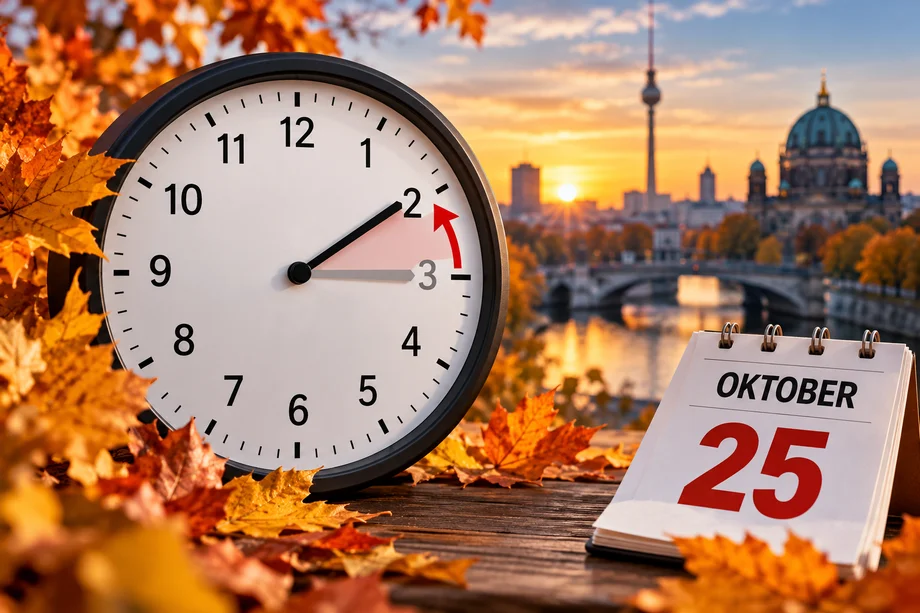
Europe is preparing for a winter crossing. On Sunday, October 25, 2026, most European countries will send their scorpions back an hour, completing the summer period.
In Central European countries, including Germany, France, Italy, Austria and Switzerland, at three o'clock the scorpions will be returned at 2:00 a.m.
This means that the night will last an hour longer, while sunsets will take place earlier on the official watch.
According to the European Commission, the seasonal change of the clock continues to apply to European Union member states, despite long-term discussions on its removal.
What countries will change the clock?
The change will be implemented in all European Union countries, including Germany, France, Italy, Spain, Poland and the Netherlands.
The United Kingdom, Norway, Switzerland and most Balkan countries will also be spent at winter hour.
Kosovo and Albania will also turn their scorpions one hour behind on October 25th.
However, not all European countries apply this practice. Iceland, Russia and Belarus do not change time by season.
Why is two times a year changed?
The seasonal change of the clock spread historically with the aim of making better use of natural light and saving energy.
However, the economic and energy benefits of this practice continue to be debated.
According to the European Parliament, modern studies have shown that energy savings can be relatively limited and change according to the country.
What happens to the organism?
The change of the clock can temporarily affect human biological rhythm.
According to the American Academy of Sleep Medicine, the seasonal changes of the clock may disrupt the cirdonian sleep and rhythm.
However, the winter - hour transition is usually considered easier for the organism than the summer crossing because people earn an extra hour.
Experts recommend maintaining a stable bedtime schedule and exposure to natural light at breakfast.
Will Europe remove the change of time?
The debate over the removal of seasonal change continues for years.
In 2019, the European Parliament supported a proposal to conclude this practice.
However, the proposal has not been finally approved by relevant EU institutions.
One of the main challenges relates to co-ordination among countries, as different decisions for the standard clock can create problems for international transportation, trade, and communication.
For this reason, the current system remains in force.
When does the time difference in the United States?
The United States does not change time to the same date as Europe.
In most American states, the transition to standard watch will take place on Sunday, November 1, 2026.
At 2: 00 a.m., the scorpions will be back at 0100.
However, Hawaii and most of Arizona do not apply the seasonal change of the clock.
This creates a week-long period during which the time difference between Europe and many American cities is temporarily changed.
What should citizens do?
Most smart phones, computers and internet-related equipment automatically change the clock.
However, traditional watches and some electronic devices may require manual adjustment.
For persons travelling internationally or having meetings with partners in various time zones, checkups during the change period are recommended.
Wintertime crossing will take place on October 25th in Europe and November 1st in most US, while the debate on the future of this practice remains open.



