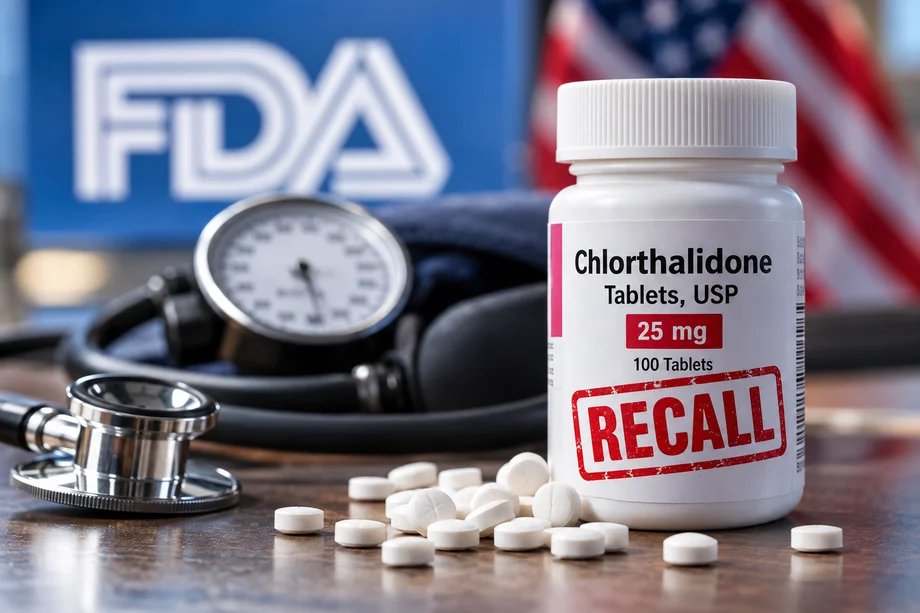
More than 25,000 bottles of a widely used blood pressure medication have been recalled in the United States after quality testing found problems with how the tablets dissolve, according to federal recall information and reports published this week.
The medication involved is chlorthalidone 25 mg, a prescription diuretic commonly used to treat high blood pressure and fluid retention.
Inventia Healthcare Limited has conducted two recalls involving chlorthalidone tablets in 2026. Together, the June and September actions cover more than 25,000 bottles, according to recall information reported from the U.S. Food and Drug Administration.
The latest recall involves 13,567 bottles distributed nationwide. It was initiated on September 3 and classified by the FDA as a Class II recall on September 17.
Which chlorthalidone tablets are affected?
The latest recall involves Chlorthalidone Tablets, USP, 25 mg, manufactured by Inventia Healthcare Limited and distributed in the United States by Rising Pharma Holdings.
Patients checking their medication should look for the following information:
- Medication: Chlorthalidone Tablets, USP
- Strength: 25 mg
- Bottle size: 100 tablets
- NDC: 64980-599-01
- Batch number: RISA24002
- Expiration date: April 2027
- Recall number: D-0852-2026
The affected products were distributed nationwide.
The September recall follows an earlier action involving approximately 11,460 bottles of chlorthalidone from the same manufacturer. That recall was initiated in June following similar quality concerns.
Taken together, the two recalls involve more than 25,000 bottles, although patients should check the specific batch and packaging information rather than assuming that every chlorthalidone prescription is affected.
Why was chlorthalidone recalled?
The issue involves what regulators describe as failed dissolution specifications.
Dissolution testing measures how a tablet releases its active ingredient. If a medication does not dissolve at the required rate, it can potentially affect how quickly or how much of the active ingredient becomes available for absorption.
The recalled chlorthalidone tablets did not meet required dissolution standards during testing.
This is particularly important for medications used to control chronic conditions such as hypertension, where consistent dosing and drug absorption are important for maintaining blood pressure.
What is chlorthalidone used for?
Chlorthalidone is a prescription diuretic, sometimes referred to as a “water pill.”
The medication helps the kidneys remove additional salt and water from the body through urine. This reduces excess fluid and can help lower blood pressure.
Chlorthalidone is frequently prescribed to people with hypertension and may also be used to treat fluid retention associated with certain medical conditions.
High blood pressure itself is a major health concern because, when uncontrolled over time, it can increase the risk of heart disease, stroke and other serious complications.
What does an FDA Class II recall mean?
The latest chlorthalidone recall has been classified as Class II.
According to the FDA, Class II applies when use of or exposure to a recalled product may cause temporary or medically reversible health consequences, or when the probability of serious adverse health consequences is remote.
It is different from a Class I recall, the FDA's most serious category, which applies when there is a reasonable probability that exposure to a product will cause serious health consequences.
A Class II classification therefore does not automatically mean that patients taking the affected medicine will suffer serious harm.
However, it does mean that the medication does not meet required standards and that people with potentially affected prescriptions should determine whether their specific product is included.
Should patients stop taking chlorthalidone?
Patients should not abruptly stop taking a prescription blood pressure medication simply because they have heard about the recall.
The FDA advises that, for Class II and Class III recalls, consumers can generally continue taking their medicine unless the recalling company provides different instructions. The agency specifically warns that in some circumstances stopping a medication can be more harmful than continuing to take it while seeking professional advice.
Anyone who discovers that their bottle matches the recalled product information should contact their pharmacist or healthcare provider for guidance.
A pharmacist may also be able to verify the manufacturer, NDC, batch number and other information if those details are not clearly visible on a patient's prescription container.
How to check whether your blood pressure medication was recalled
The most important step is to determine whether the medication in your possession actually matches the recalled product.
The FDA recommends checking the lot or batch number on a medicine's label against the information included in the recall notification. Patients who are uncertain can contact their pharmacy, healthcare provider or the manufacturer for assistance.
For the latest September chlorthalidone recall, the key identifier is batch RISA24002, with an expiration date of April 2027, for the affected 25 mg tablets in 100-count bottles.
Having chlorthalidone at home does not by itself mean the medication has been recalled. Different manufacturers, dosages, batches and package sizes may not be part of the affected products.
This is the second chlorthalidone recall from the manufacturer in 2026
The September action is notable because Inventia Healthcare had already recalled another quantity of chlorthalidone earlier this year.
The earlier recall covered approximately 11,460 bottles and also involved problems identified through stability and dissolution testing.
A June recall notice provided to the California State Board of Pharmacy stated that testing found dissolution results that failed to meet the applicable acceptance criterion. The notice said the affected product had been shipped between December 2024 and May 2026.
The latest September action added another 13,567 bottles from a separate batch.
What should patients do now?
Anyone taking chlorthalidone should first check the prescription label and compare the identifying information with the recalled products.
If the information matches — or if the patient cannot determine whether their medication is affected — the safest next step is to contact the dispensing pharmacy or healthcare provider.
The FDA says consumers should follow instructions from the recalling company and consult a doctor or pharmacist when they have questions about a recalled medication.
Patients should also seek medical attention if they experience concerning symptoms or believe their blood pressure medication is not working as expected.
Most importantly, the recall does not apply to every chlorthalidone tablet sold in the United States. It concerns specific products and batches, making the identifying numbers on the medication particularly important.



