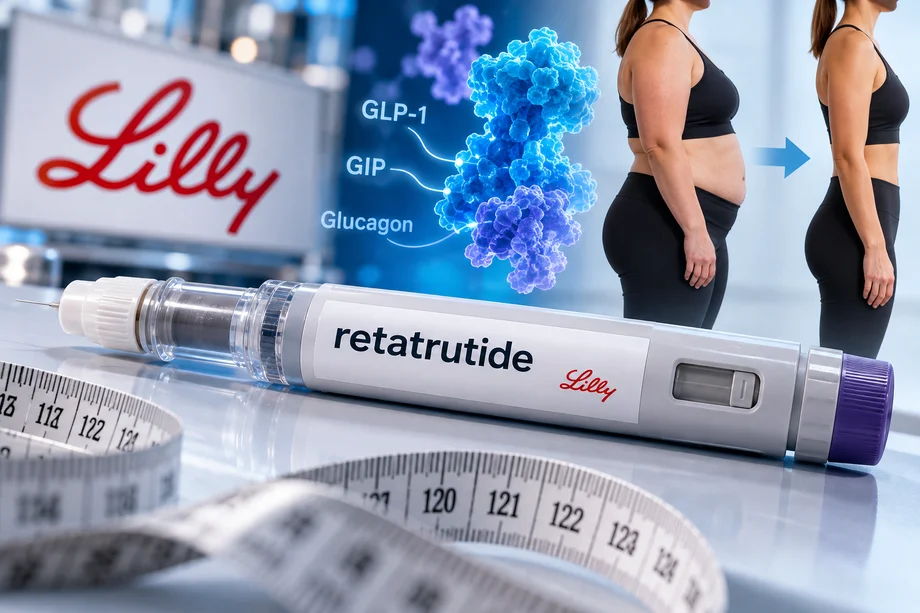
A new experimental weight loss drug is drawing attention to the scientific community after publishing the results of the third phase of clinical studies.
The medicine, called a retattrutside and developed by the American company Eli Lilly, has helped obesity and Type 2 participants to lose a considerable body weight.
According to Medical Xpress, which on October 13th reported the results of the study published in the scientific magazine The Lancet, the research included 1,152 adults and lasted 80 weeks.
Participants who received the highest dose of reforms lost an average of 18.8% of their body weight, compared to 5.1% in the group that took placebo. Almost a third of the patients who received the highest dose lost at least 25% of their weight.
For a person weighing 120 pounds [120 kg], the 25% loss would be translated into 30 pounds [30 kg] less. However, this is just one mathematical example and not one that can be guaranteed for each patient.
What distinguishes the reforms from existing treatments is the way of action. Unlike semaglutide, which operates mainly through the GLP-1 receptor, or Tyrzepatide, which activates two hormonal receptors, the new drug acts simultaneously over three: GLP-1, GIP and glucose.
This combination is designed to affect the sense of satisfying, controlling blood sugar, and spending energy on the organism.
The study also showed improvements in diabetes control, blood pressure, beli perimeter, and several other metabolic indicators.
But positive results are also accompanied by side effects. According to researchers, up to 34% of participants reported diarrhea, up to 28% mixed and up to 16% vomited. Part of the patients discontinue treatment because of unwanted reactions.
The reformation remains an experimental drug and has not yet been adopted for general use. Eli Lily intends to apply for approval to the American authorities during 2027.
Experts stress that further assessments of long-term security and the effects of treatment on various groups of patients are needed.
The new results, however, suggest that the next generation of drugs against obesity could offer even greater weight loss, opening a new chapter in dealing with one of the most common health problems in the world.