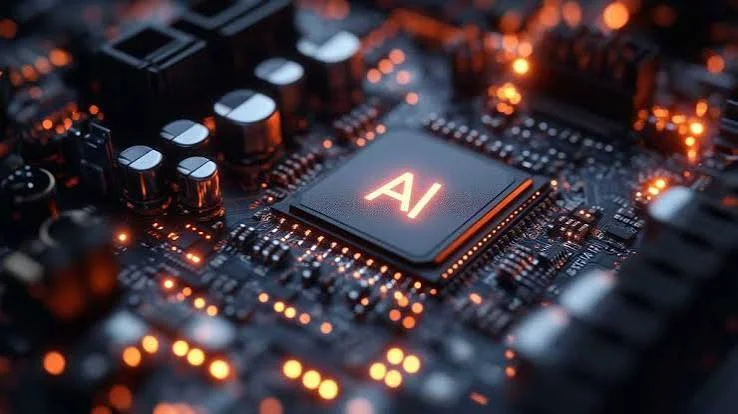
The artificial intelligence revolution is beginning to affect another crucial part of the technology industry: CPUs.
AI demand has already transformed the market for graphics processors and high bandwidth memory.
Now analysts are watching whether the rise of AI agents could dramatically increase demand for traditional server processors as well.
Industry analysis highlighted on October 1 indicates that agent based AI workloads could reshape CPU demand inside data centers.
That matters because artificial intelligence systems do not run on GPUs alone.
Large data centers contain enormous numbers of processors responsible for coordinating applications, databases, networking and general computing workloads.
AI Agents Could Require Huge Computing Resources
Today's popular AI systems primarily respond to user requests.
The next generation of AI agents could continuously perform tasks.
An agent might research information, analyze documents, communicate with other software, process data and execute multiple actions before delivering a final result.
If millions of businesses begin deploying these systems simultaneously, computing requirements could rise significantly.
That creates an opportunity not only for GPU manufacturers but also for companies producing server CPUs, memory, networking equipment and storage.
Nvidia Is Expanding Beyond GPUs
Nvidia has become the defining company of the AI infrastructure boom because of its dominant position in advanced GPUs.
But the boundaries between different chip markets are becoming less clear.
Nvidia has expanded its ambitions into CPU technology, while cloud giants including Amazon and Google are developing more of their own processors.
Traditional semiconductor companies therefore face competition from several directions.
Cloud providers want chips optimized for their own massive infrastructure.
AI companies want maximum computing performance.
Data center operators want better energy efficiency.
All three pressures are accelerating chip development.
World Models Could Create Another Wave
Another emerging technology is also attracting attention.
So called world models attempt to help artificial intelligence understand and predict how physical environments behave.
The technology could become particularly important for robotics and autonomous driving.
Analysts cited by The Wall Street Journal say research into world models could eventually create additional demand for AI computing and memory.
The technology remains at an early stage, but the potential applications are enormous.
Robots need to understand physical environments.
Autonomous vehicles need to anticipate how roads, vehicles and pedestrians may behave.
AI systems capable of modeling those environments could become a critical part of both industries.
The AI boom therefore appears to be expanding beyond chatbots.
GPUs were only the beginning.
CPUs, memory, robotics, autonomous vehicles and entire data center architectures could become part of the next phase.



