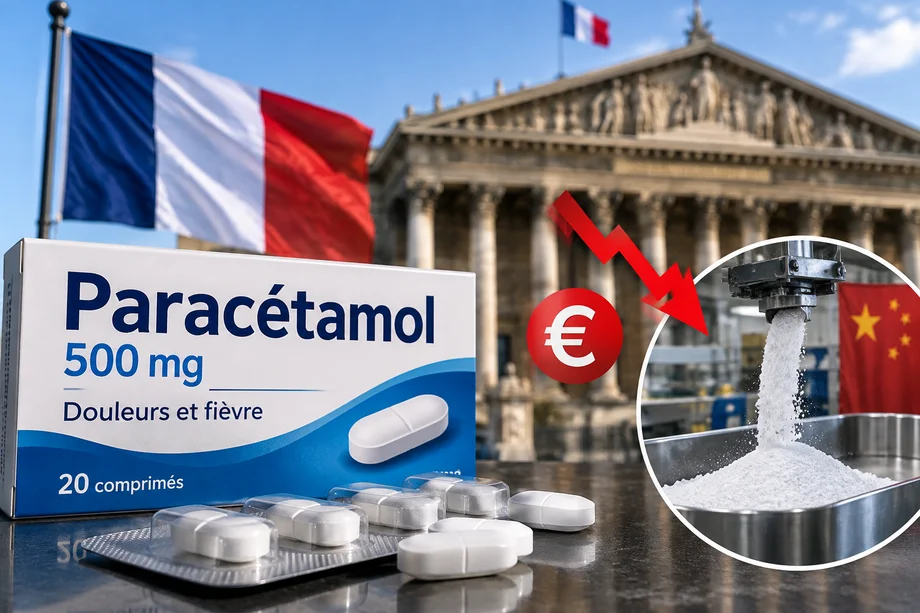
Paracetamoli, one of the most widely used medicines against pain and temperature, has become the focus of an economic debate in France.
According to French television BFMTV, the head of a company producing the active precetamol ingredient has criticised the government's possibility of lowering the price of this drug.
He warns that such a decision could harm efforts to restore pharmaceutical production in France.
Why is the price cut being rejected?
In the report released on October 8th, BFMTV quoted the company's leader, who argues that the government is acting in opposition to its goal of strengthening pharmaceutical independence.
The problem, according to industry, is that production in France has higher costs than in some Asian countries, particularly energy, labour power and environmental standards respect.
If the price of the drug decreases, no matter what, local producers may find it harder to compete.
China at the heart of the debate
The head of the French company has proposed establishing an environmental penalty for medicines imported from China.
According to BFMTV, demand relates to differences in production standards and environmental costs.
The proposal aims to give French producers more equal terms of competition, but it may also raise questions about the impact such measures would have on prices and medicines.
This is an industry requirement, not a move approved by French authorities.
France seeks to produce medicine itself
The case of the Paracetamol matters strategic to Paris.
During COVID-19 pandemic, difficulties in international supply chains highlighted Europe's dependence on pharmaceutical production outside the continent.
Since then, France has undertaken initiatives to restore the production of several active components.
One of the main projects is that of Seqen Company, which is developing new capacity for producing paracetamol on French territory.
Even in the French Senate, concern has been raised that international competition, energy costs and price policy could jeopardise domestic production sustainability.
What does that mean for consumers?
The debate does not mean that paracetamoli is being banned or that its use has become more dangerous.
It is about how the drug is produced, imported, and defined.
For consumers, a discount may bring savings. On the other hand, producers argue that domestic industry support is important to avoid dependence on imports during crises.
French authorities thus face a difficult choice: to maintain affordable medicines and at the same time ensure that domestic pharmaceutical production remains economically sustainable.
At the moment, the disputed proposals do not constitute a confirmed change of the Paracetamol price.



