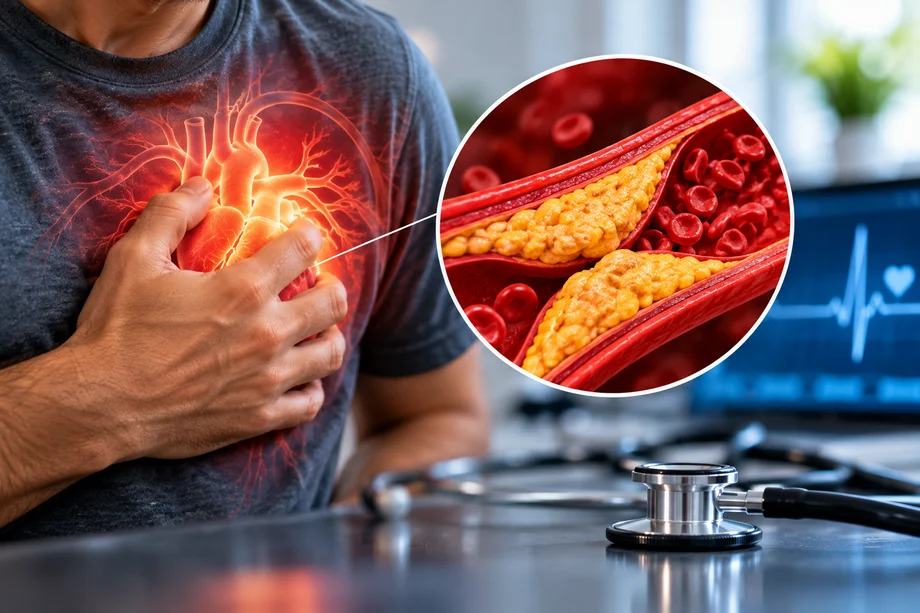
Heart disease continues to be one of the greatest health threats worldwide, while one of the major risk factors can develop in silence, pain, and no visible signs.
It is a high cholesterol problem that can affect even people who feel completely healthy.
According to the World Health Organization (OBSH), cardiovascular diseases are the leading cause of global death. Factors such as high blood pressure, smoking, diabetes, and high cholesterol have a significant impact on their development.
Colesterol is a fatty substance that the organism needs for important functions, including hormone production and cell construction.
The problem begins when excess amounts of LDL cholesterol, often known as bad cholesterol, accumulate in blood.
In time, it can contribute to the creation of fatty plaques inside arteries, narrowing blood vessels and limiting normal circulation.
This process, known as atherosclerosis, can develop for many years before the first symptoms.
According to the American Heart Association, high cholesterol usually does not cause visible symptoms. Hence, blood testing is the primary way to identify the problem.
A person may have high cholesterol levels even if he is fed relatively well, is physically active, and has no other known health problems.
Genetic heritage also plays an important role.
In some families an inherited disorder called family hypercholesterology can cause very high cholesterol levels at an early age.
U.S. Centers for Disease Control and Prevention (CDC) stress that cholesterol control helps identify people who may have an increased risk of heart disease and stroke.
Doctors usually estimate certain indicators, including total cholesterol, LDL, HDL, and triglycerides.
However, the results are not interpreted in isolation. Age, arterial tension, diabetes, smoking, and family history affect the definition of individual danger.
To lower cholesterol, experts recommend limiting full fats, consuming fiber - rich foods, regular physical activity, and avoiding tobacco.
In some cases, lifestyle changes are not enough, and a doctor may recommend cholesterol - reducing drugs, including Statin.
Experts warn that lack of symptoms should not be interpreted as a risk shortage.
A simple blood check, combined with the assessment of other risk factors, can help prevent serious complications long before they appear.
The up-to-date recommendations of 2026 by American Heart Association and American College of Cardiology also highlight the importance of the assessment of individual risk and control of lipoprocyinsa, known as Lpéa, at least once in life.
The main message of experts is that heart protection should not start only when problems arise, but much earlier, through constant control and health care.



