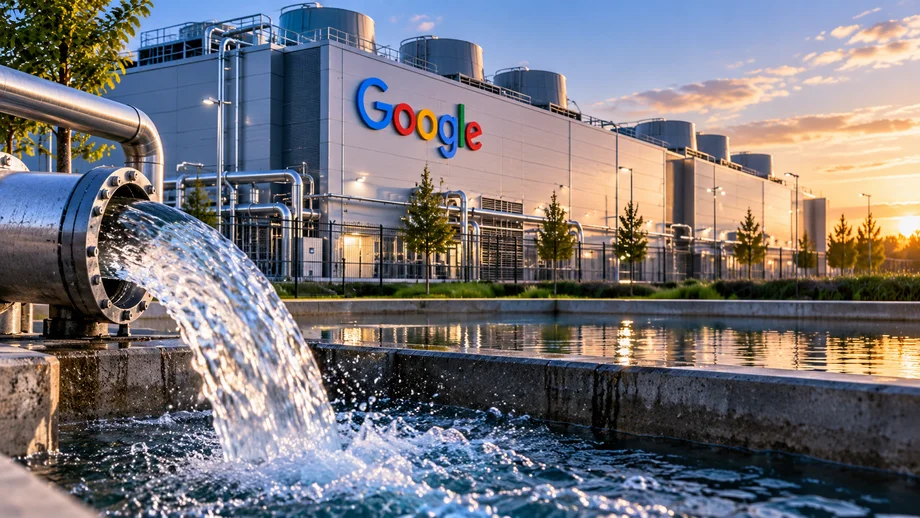
The enormous amount of water required to operate modern data centers is back in the spotlight as Google faces questions over how it measures water stress around its global infrastructure.
According to an analysis published by French technology outlet Next INpact, Google withdrew more than 50 million cubic meters of water for its data centers in 2025. That equals more than 50 billion liters.
The figure covers direct withdrawals and does not include water associated with generating the electricity consumed by those facilities.
Google's 2026 Environmental Report says that 72% of its freshwater withdrawals came from sources classified as having a low risk of water depletion or scarcity. Another 15% came from medium risk sources and 13% from high risk sources.
But the classification itself has become the focus of scrutiny.
Next INpact reports that Google previously used data from the World Resources Institute to assess water stress but later adopted its own Water Risk Framework for data centers.
When the French outlet recalculated Google's disclosed data using the widely used WRI framework, it found differences in how some locations could be classified.
Google argues that its own methodology provides a more detailed assessment of local conditions than broader regional tools. The company says water sources can sometimes be located in a different watershed from the physical data center itself, making simple geographic comparisons potentially misleading.
The debate arrives as the rapid expansion of cloud computing and artificial intelligence increases scrutiny of the resources needed to operate data centers.
Servers generate enormous amounts of heat and must be continuously cooled. Water based cooling can be particularly efficient. Google says that in many locations it can reduce cooling energy use by approximately 10% compared with air cooling.
The company is also investing heavily in water replenishment projects.
Google says it replenished approximately 7.7 billion gallons of water in 2025, equivalent to about 78% of its total freshwater consumption that year. Its longer term target is to replenish more water than it consumes at its sites by 2030.
The issue extends far beyond Google.
A scientific study published in September found that roughly one quarter of global data center capacity is located in areas experiencing water stress, highlighting a growing challenge as demand for computing infrastructure continues to accelerate.
As AI, cloud services and digital platforms expand, the debate is increasingly shifting from how powerful data centers can become to how much electricity and water the digital economy can sustainably consume.
:::



