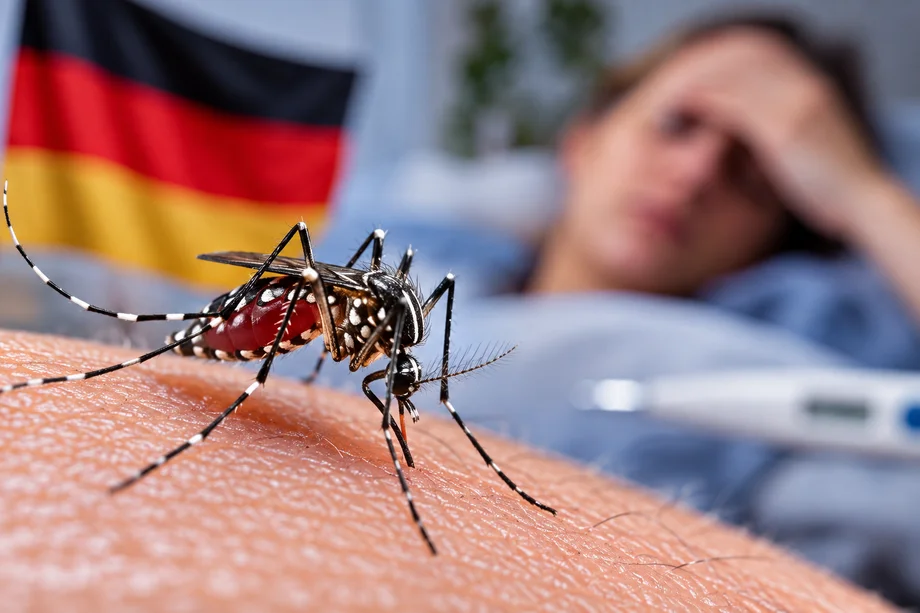
Germany has confirmed its first known human case of Sindbis fever acquired inside the country, according to the Robert Koch Institute.
The patient is a 60 year old man from the southwestern state of Baden Württemberg. He became ill in July and was later confirmed to have been infected with Sindbis virus, known as SINV.
The discovery is significant because Sindbis virus had previously been detected in mosquitoes in Germany, while antibodies suggesting earlier infections had also been found in blood donors.
This is the first time, however, that German health authorities have directly confirmed a locally acquired human illness linked to the virus.
What happened to the patient?
According to the Robert Koch Institute, the man became ill on July 12.
He lives in an area where populations of the Asian tiger mosquito are established.
Doctors initially tested him for Chikungunya because some of his symptoms and the local mosquito situation raised concerns about that infection.
Testing was subsequently expanded to include Sindbis virus, with the infection confirmed in September.
The announcement was made on October 1.
What is Sindbis virus?
Sindbis virus is primarily maintained in a transmission cycle involving wild birds and mosquitoes.
Humans can become infected when bitten by an infected mosquito.
The virus has previously been found in parts of Northern Europe, Africa, Asia and Australia.
Importantly, there is currently no known human to human transmission of Sindbis virus.
This means an infected person is not believed to spread the virus directly to another person through ordinary contact.
What are the symptoms?
Sindbis fever can produce symptoms that resemble some other mosquito borne illnesses.
German health authorities say doctors should consider the infection when patients develop a combination of symptoms during mosquito season.
Typical symptoms include sudden fever, an itchy skin rash and significant joint pain.
The joint pain can be particularly troublesome.
While fever and skin symptoms generally disappear within one or two weeks, joint pain may continue for weeks or even months in some patients.
That can interfere with everyday activities long after the initial infection has passed.
Is Sindbis virus dangerous?
Current evidence does not suggest that Sindbis fever is generally a life threatening disease.
The Robert Koch Institute says the illness is usually self limiting, although prolonged joint pain can create significant discomfort.
There is currently no specific antiviral treatment for Sindbis virus.
Treatment therefore focuses on managing symptoms, including the use of pain relieving and anti inflammatory medicines when medically appropriate.
Virus had already been found in German mosquitoes
The human case did not appear completely without warning.
Sindbis virus had previously been detected in mosquitoes around the Weinheim area.
Researchers had also found antibodies in blood donors from the region, suggesting that some people may have been exposed to the virus previously even though no locally acquired clinical case had been confirmed.
The new case provides stronger evidence that when the virus circulates among mosquitoes and wild birds in Germany, human infections can also occur.
That is why health authorities are asking doctors to consider Sindbis fever when patients present with compatible symptoms during mosquito season.
Mosquitoes are spreading in Germany
The announcement also comes amid increasing attention to mosquito borne diseases in Europe.
Baden Württemberg has established populations of the Asian tiger mosquito, a species originally native to Southeast Asia.
The mosquito was first detected in Baden Württemberg in 2007 and has since been identified in additional parts of Germany.
Health authorities in the state say climatic conditions are expected to support further expansion of the mosquito.
The Asian tiger mosquito is particularly closely monitored because it is capable of transmitting several viruses under suitable conditions.
However, the presence of mosquitoes does not mean that every mosquito carries a dangerous pathogen, and health authorities say the overall risk of disease transmission remains limited.
How can people protect themselves?
Because there is no specific treatment or vaccine routinely available for Sindbis fever, preventing mosquito bites remains the main protective measure.
German health authorities recommend wearing clothing that covers exposed skin, using mosquito repellent and using mosquito nets where appropriate.
People should also be aware of symptoms following mosquito exposure, particularly unexplained fever accompanied by an itchy rash and pronounced joint pain.
Germany's first confirmed locally acquired case does not by itself indicate a widespread outbreak.
But it provides new evidence that Sindbis virus can cause human disease inside the country, giving doctors and public health authorities another mosquito borne infection to watch closely during future mosquito seasons.



