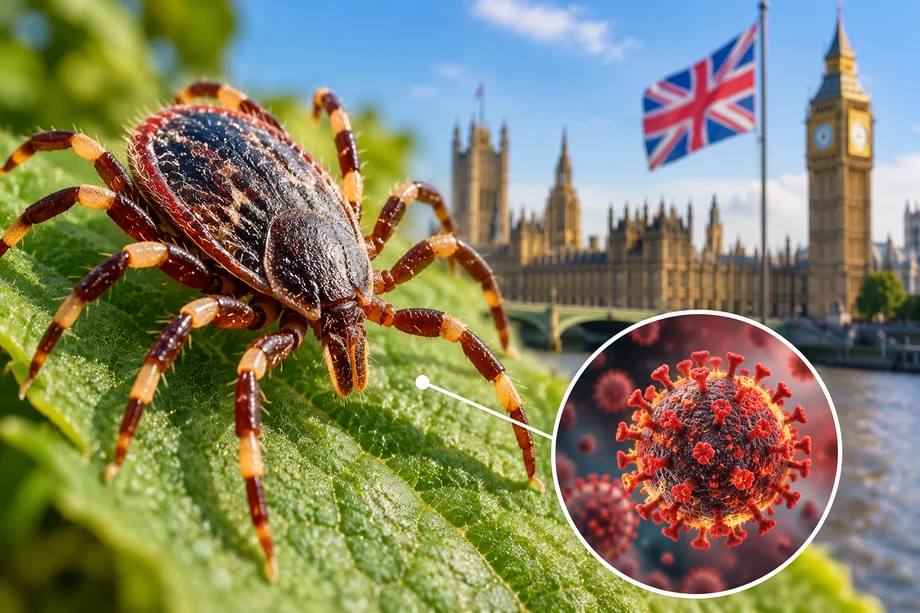
A potentially dangerous tick species is surviving for longer in the United Kingdom as increasingly hot summers create more favorable conditions, according to a UK public health expert.
Hyalomma ticks normally arrive in Britain attached to migratory birds traveling from Africa and the Mediterranean.
Historically, Britain's climate has generally been too cool for these ticks to develop into adults. But Dr Jolyon Medlock, head of medical entomology at the UK Health Security Agency, says unusually hot summers are changing that picture.
During heatwave years, some Hyalomma ticks can now survive long enough to reach adulthood in Britain, Sky News and The Independent reported.
Why Hyalomma ticks matter
Hyalomma ticks are important because they are the principal vectors of Crimean Congo haemorrhagic fever, known as CCHF.
The disease can cause fever, dizziness, nausea and muscle pain. Severe cases can involve bleeding, liver failure and kidney deterioration.
UKHSA estimates that between 10,000 and 15,000 human CCHF infections occur globally each year, including around 500 deaths, although the real number may be higher because infections can go undetected.
Is the virus spreading in Britain?
There is an important distinction.
CCHF is not currently present in the UK, and there is no evidence that Hyalomma ticks have established permanent populations in the country, according to UKHSA.
The probability of someone becoming infected with CCHF within the UK is currently considered very low.
Adult Hyalomma ticks have been detected only rarely. However, their ability to survive through more stages of their life cycle during exceptionally warm summers is being closely monitored.
Hotter summers could change tick activity
Hyalomma ticks prefer hot and dry environments.
UK government climate assessments say warmer temperatures could increase the number of years in which the species is capable of surviving in Britain, although current modelling suggests autumn conditions may still be too cold for permanent populations to become established.
That makes surveillance increasingly important.
The UKHSA operates a national Tick Surveillance Scheme to identify native and imported species and monitor potential changes in their distribution.
Cases have appeared elsewhere in Europe
The disease is already present much closer to Britain.
CCHF is endemic across parts of Africa, the Balkans, the Middle East and Asia. Locally acquired infections have also been recorded in Spain and Portugal.
Spain reported several CCHF cases during 2026, including cases in Salamanca province.
This geographical expansion is one reason European health authorities continue monitoring Hyalomma ticks.
How to protect yourself from ticks
People spending time in grassy, wooded or rural environments can reduce their exposure to ticks by using insect repellent and checking their skin and clothing after being outdoors.
UKHSA also advises people traveling to countries where CCHF occurs to avoid areas with large numbers of ticks when possible and carefully inspect clothing and skin.
The latest findings do not mean Britain is facing an outbreak of Crimean Congo haemorrhagic fever.
They do, however, show how warmer weather can create new opportunities for species that previously struggled to survive in the UK.
For health authorities, that makes monitoring Britain's changing tick population increasingly important.



