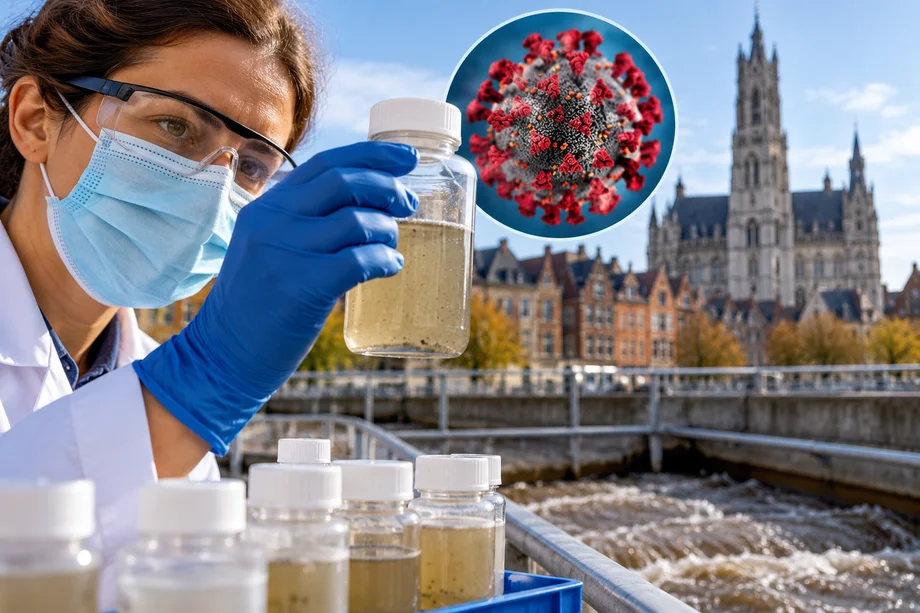
COVID 19 is attracting renewed attention in Belgium after unusually high concentrations of the coronavirus were detected in wastewater in Leuven.
Belgian media reported that measurements from the city's wastewater showed a significant increase in SARS CoV 2 circulation. Virologist Elke Wollants of KU Leuven said the latest concentration was exceptionally high compared with recent measurements.
The development has quickly attracted public attention, with searches for Wollants rising sharply on Google in Belgium on Saturday evening.
Wastewater monitoring has become an important tool for tracking the spread of COVID because traces of the virus can be detected even when many infected people are not being tested.
The latest readings do not necessarily mean Belgium is entering a major new COVID wave. However, they indicate that the virus is circulating strongly in the population and provide an early signal that infections may be increasing.
The rise comes as seasonal respiratory illnesses are again becoming more noticeable. VRT has also recently highlighted increased illness as respiratory infections circulate, adding to renewed public interest in COVID and other viruses.
Health experts have repeatedly emphasized that people who develop respiratory symptoms should be particularly careful around older adults and people who are vulnerable to serious illness.
For most people, COVID is now managed differently than during the pandemic years, but wastewater surveillance continues to give scientists a broader picture of how widely the virus is circulating.
The sharp increase detected in Leuven will therefore be closely watched to determine whether it represents a temporary local spike or the beginning of a wider increase in infections.



