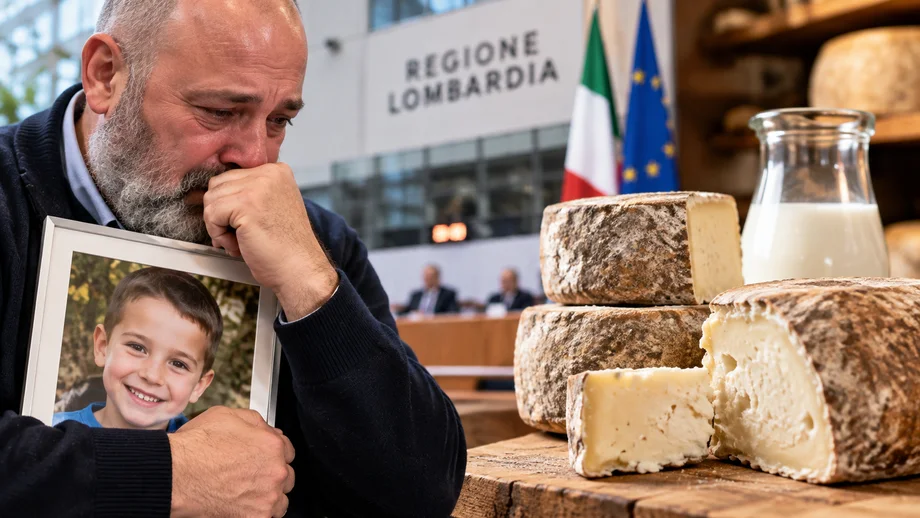
A debate over raw milk cheese has erupted in northern Italy after the father of a child who died following an E. coli infection confronted regional politicians considering changes to rules governing traditional cheese production.
Giovanni Battista Maestri appeared at Lombardy’s regional council in Milan this week as lawmakers considered a motion concerning producers of cheeses made from unpasteurized milk. His son, Mattia Maestri, died in August at the age of 13 after spending nine years in a vegetative state.
Mattia became seriously ill in 2017, when he was four, after eating cheese made with raw milk that was contaminated with Shiga toxin producing Escherichia coli, known as STEC. The infection caused hemolytic uremic syndrome, a potentially life threatening condition that can severely damage the kidneys and other organs. Italy’s Supreme Court previously confirmed a causal link between the contaminated cheese and Mattia’s injuries.
His father is now campaigning to prevent what he sees as a retreat from safeguards introduced to reduce similar infections.
The controversy centers on a motion promoted by Fratelli d’Italia politicians in Lombardy. The proposal seeks support for traditional raw milk cheese producers, including financial assistance for microbiological testing, while asking for a more differentiated approach to regulatory requirements.
Supporters argue that raw milk cheese is an important part of Lombardy’s agricultural heritage and mountain economy and that compliant producers should not be unfairly penalized. Giacomo Zamperini, the motion’s lead sponsor, has said producers who violate health standards should face zero tolerance while arguing that traditional production itself should not be demonized.
Maestri strongly disagrees with weakening existing protections, particularly when children are involved. He said the issue concerns human lives and urged politicians to reconsider the proposal. Following a face to face discussion, Zamperini agreed that some of the information contained in the motion would be reviewed and corrected.
Italy’s Health Ministry warns that raw milk and products made from milk that has not undergone sufficient heat treatment can contain harmful bacteria. In August, the ministry published updated information on preventing STEC infections associated with unpasteurized milk and dairy products.
The issue is especially important for vulnerable consumers. Children can face severe complications from STEC infections, while pregnant women, older adults and people with weakened immune systems may also face greater risks from pathogens associated with unpasteurized products.
The controversy has now moved beyond regional politics. Searches for “latte crudo,” Italian for raw milk, are surging in Italy, as Mattia’s story again draws national attention to the balance between protecting traditional food production and protecting consumers.
For Mattia’s father, however, the argument is far more personal. His campaign is about ensuring that another family does not experience what happened to his son.



