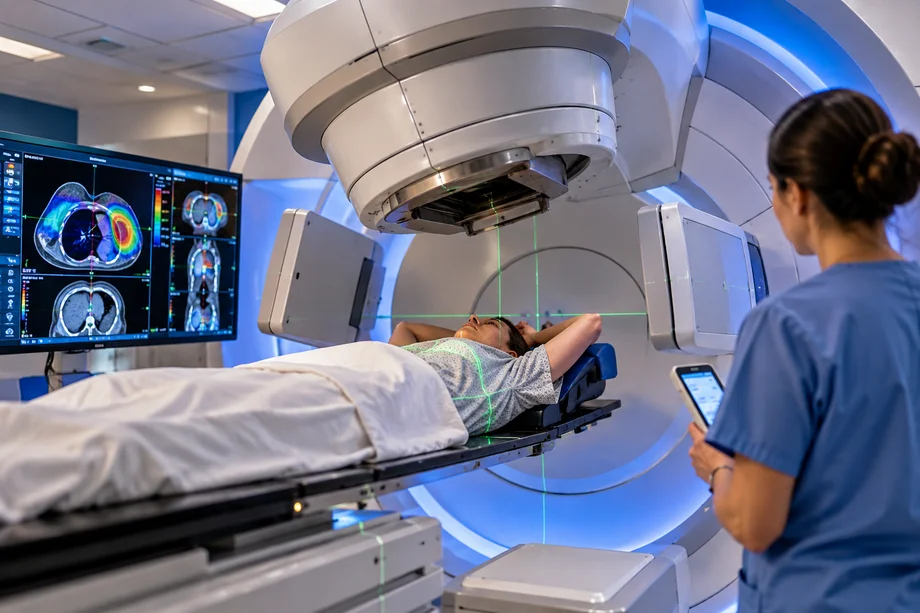
Cancer patients in Australia are gaining access to a new form of radiation therapy that specialists say can significantly reduce treatment time while delivering radiation more precisely around tumours.
The Western Cancer Centre at Dubbo Hospital in New South Wales has become the first Australian public provider to offer RapidArc Dynamic, known as RAD.
More than 110 patients have already received treatment using the technology, according to ABC News Australia.
What is RapidArc Dynamic?
RapidArc Dynamic is an advanced form of radiation therapy designed to target cancerous tissue while limiting radiation exposure to surrounding healthy organs.
The system uses a device called a collimator to shape the radiation beam according to the tumour.
As the treatment machine rotates around the patient, the radiation beam can be adjusted in real time.
Unlike conventional RapidArc treatment, RAD can also pause at different points during the rotation, allowing clinicians to control where radiation is delivered with greater precision.
Treatment sessions could be cut in half
One of the biggest potential benefits is speed.
University of New South Wales Professor of Radiation Oncology Geoff Delaney told ABC News Australia that RAD could halve the number of radiation treatments required for some patients.
It can also reduce the amount of time patients spend receiving treatment during individual hospital visits.
That can make a major difference for cancer patients who need repeated radiation therapy sessions over several weeks.
NSW Government guidance explains that conventional breast cancer radiotherapy, for example, can involve treatment over three to six weeks, with patients regularly returning to hospital for radiation sessions.
The exact number and length of treatments always depend on the cancer type, treatment plan and individual patient.
Why precision matters
Radiation therapy works by damaging cancer cells, but doctors must carefully limit the radiation received by healthy tissue surrounding a tumour.
This becomes particularly important when cancers are located close to vital organs.
Acting chief radiation therapist Catherine Osborne explained that during breast cancer treatment, clinicians want to treat the necessary breast tissue while reducing unnecessary radiation reaching the heart and lungs.
RAD gives treatment teams additional control over how the radiation dose is delivered as the machine moves around the patient.
The goal is not simply to make treatment faster. It is also to deliver the prescribed dose as accurately as possible while protecting healthy tissue.
Rural patients are among the biggest winners
The location of the first public rollout is significant.
Dubbo is around 400 kilometres northwest of Sydney and provides specialist medical services for patients living across a large area of regional New South Wales.
Cancer patients in rural Australia can face long journeys for specialist treatment, sometimes repeatedly over several weeks.
The Western Cancer Centre was specifically developed to allow more patients to receive sophisticated cancer treatment closer to home instead of travelling to Sydney, Newcastle, Canberra or other major centres.
The NSW Government says the Dubbo centre provides radiotherapy, chemotherapy and other cancer treatments as part of the Western NSW Local Health District.
More than 110 patients already treated
RAD treatment began at the Western Cancer Centre in Dubbo in July.
Since then, more than 110 patients have been treated using the technology.
Western NSW Local Health District has also confirmed plans to introduce RAD for clinical use at the Central West Cancer Care Centre in Orange.
Osborne said other medical centres around Australia are also moving toward adopting the technology.
Professor Delaney expects RAD to become increasingly common as hospitals upgrade radiation therapy equipment and treatment techniques.
A major shift for public cancer care
Advanced cancer technologies often arrive first at major metropolitan hospitals or private treatment centres.
The rollout in Dubbo reverses that pattern by giving regional patients early access through Australia's public health system.
For patients who already face the physical and emotional burden of cancer treatment, shorter hospital visits and fewer radiation sessions could provide meaningful benefits.
The technology does not eliminate the need for careful cancer treatment planning, and RAD will not be suitable for every patient or every tumour.
But its arrival in the Australian public system marks an important step in making faster and more precise radiation therapy available to more people.



