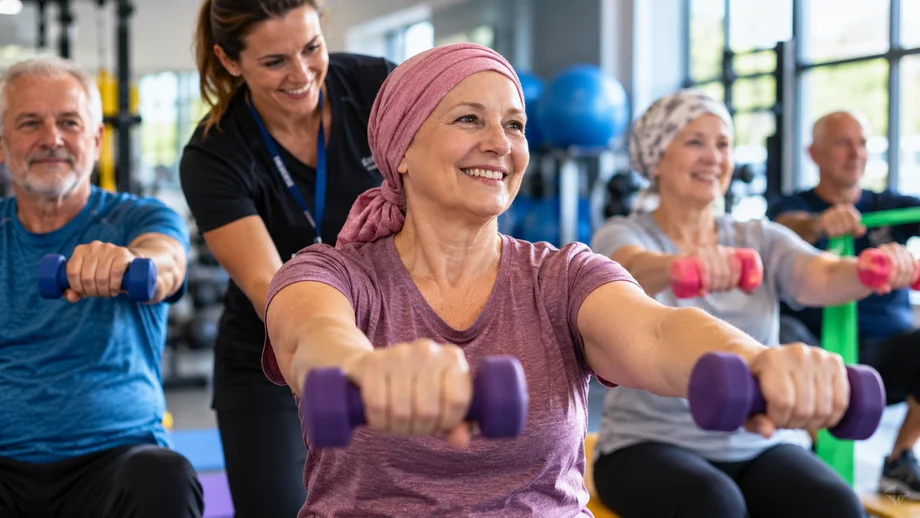
Cancer patients returning to exercise are attracting growing attention in the UK, as community fitness programs help people regain strength and confidence following treatment.
The subject has also begun trending on Google, following recent BBC reports about cancer patients in Sheffield and Middlesbrough who have used exercise as part of their recovery.
One recent story highlighted a Sheffield cancer patient who is now helping other people return to fitness. Another focused on a cancer fitness group connected with the Middlesbrough FC Foundation, where participants described the program as having a major impact on their lives.
The stories highlight a broader shift in how physical activity is viewed during and after cancer treatment.
Exercise was once something many patients assumed they should avoid while recovering. Today, carefully adapted physical activity can form part of rehabilitation for some patients, depending on their diagnosis, treatment and overall health.
The benefits are not necessarily about intense gym sessions.
Walking, light resistance exercises, cycling and supervised group activities can help people gradually rebuild physical capacity after periods of treatment and inactivity.
The social aspect can be important too. Exercising alongside people who have experienced similar health challenges can provide motivation and reduce the isolation that sometimes accompanies serious illness.
Similar programs are appearing elsewhere in England. Recent reporting from Sheffield, for example, described free seated dance sessions for people affected by cancer, strokes, diabetes, arthritis and other health conditions. The sessions combine physical movement with social activity and are supported by Sheffield Hospitals Charity.
However, exercise after cancer is not a one size fits all prescription.
Cancer treatments can have very different effects on the body, and some patients may experience severe fatigue, reduced immunity, bone problems, heart complications or other conditions requiring additional precautions.
For that reason, people undergoing cancer treatment or recovering from it should discuss significant changes to their exercise routine with their medical team, particularly if they have been inactive for a long period.
The goal is not necessarily to return immediately to the fitness level someone had before their diagnosis.
For many patients, progress may begin with something much simpler: walking a little farther, completing a supervised exercise session or gradually regaining the strength needed for everyday activities.
The growing popularity of cancer fitness programs shows that for some survivors, exercise can represent more than physical training. It can become an important step toward reclaiming independence and returning to life after treatment.



