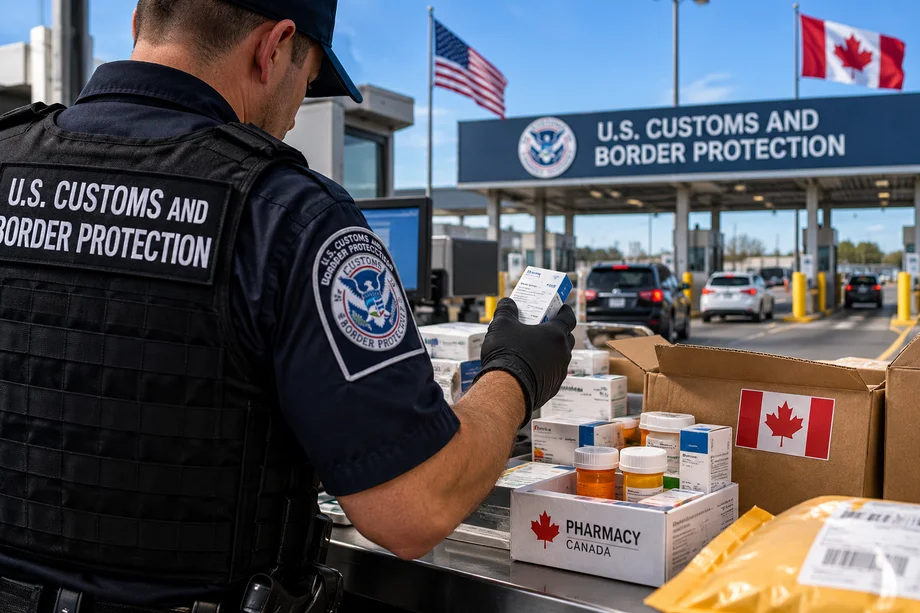
Millions of Americans who look outside the United States for cheaper prescription medicines could soon face a major change at the border.
New U.S. Customs and Border Protection requirements are approaching an October 22 compliance deadline, raising concerns that prescription medicines mailed from Canadian and other international pharmacies could become more difficult or expensive to receive.
The change stems from a CBP rule published in June that suspended the longstanding de minimis customs exemption for international postal shipments valued at $800 or less and established a new postal entry process.
For products regulated by other federal agencies, including medicines overseen by the Food and Drug Administration, key compliance requirements take effect October 22.
The rule itself does not explicitly ban Americans from receiving prescription medicines from Canada.
However, the additional customs requirements could create significant practical barriers for pharmacies sending individual prescriptions to American patients.
The Canadian International Pharmacy Association says the new requirements could make it extremely difficult for routine personal prescription orders from licensed international pharmacies to reach U.S. customers under existing arrangements.
The issue matters because some Americans have historically purchased medicines internationally to reduce their prescription costs.
A study cited in recent reporting estimated that around 2.3 million U.S. adults had purchased prescription medicines from another country to save money, based on survey data collected between 2015 and 2017.
The legal situation surrounding personal imports is already complicated.
Canada Post notes that CBP's position is that individuals generally cannot import prescription drugs into the United States. However, the FDA may exercise discretion in certain personal importation cases, including some situations involving up to a three month supply.
The new customs rule does not rewrite those underlying drug laws. Instead, it changes the process through which international postal shipments enter the country.
That distinction is important.
Some reports have described the October change as effectively ending Canadian prescription imports, but it is not yet clear how aggressively the new procedures will affect every individual patient or whether further guidance will emerge before the deadline.
The issue has also reached Washington.
STAT reports that lawmakers have urged the Trump administration to reconsider the new requirements because of concerns about Americans who depend on lower cost medicines purchased internationally.
The controversy is now attracting significant public attention.
Google Trends showed more than 10,000 searches for "U.S. Customs and Border Protection" within hours on Sunday, with search interest continuing to rise as Americans looked for information about the prescription drug changes.
For patients who rely on medicines shipped from abroad, October 22 is now the date to watch.
The biggest question is not whether CBP has changed its customs procedures. That has already happened.
The question is how much harder those procedures will make it for ordinary Americans to continue receiving the cheaper prescriptions they have relied on.



