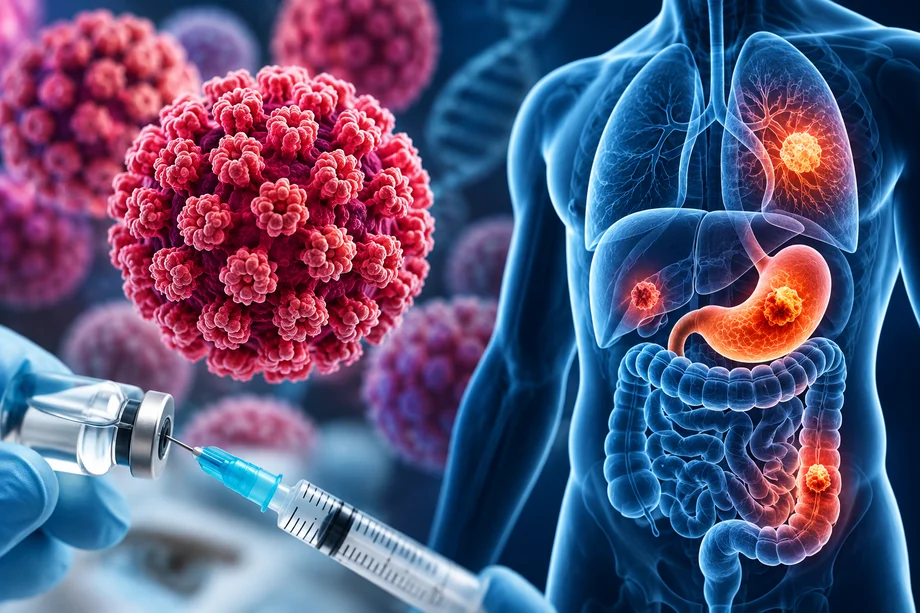
About one in eight cancer cases worldwide is linked to an infection, according to a major new analysis that highlights an often overlooked group of preventable cancer risks.
Researchers from the International Agency for Research on Cancer, part of the World Health Organization, estimate that infections caused approximately 2.3 million new cancer cases in 2024. That represents about 12% of all cancers diagnosed globally that year.
The study, published in The Lancet Oncology, examined infectious agents known to cause cancer and used data from the IARC Global Cancer Observatory.
Among the most important are human papillomavirus, better known as HPV, the bacterium Helicobacter pylori, hepatitis B and hepatitis C viruses.
These infections can contribute to several forms of cancer.
HPV is strongly associated with cervical cancer and can also cause cancers affecting other parts of the body. Hepatitis B and C can lead to liver cancer, while H. pylori is a major cause of stomach cancer.
The new analysis also incorporated additional infectious agents and newly established links between infections and cancer. Researchers included HIV and Merkel cell polyomavirus and considered recent evidence connecting Epstein Barr virus with stomach cancer.
The findings are significant because many infection related cancers can potentially be prevented.
Vaccines are available against HPV and hepatitis B. IARC previously estimated that more than 1.1 million cancer cases were caused by vaccine preventable infections in 2020 alone.
Other strategies include testing and treatment for hepatitis infections, cervical cancer screening and treatment of H. pylori. Earlier this year, an IARC working group also published recommendations supporting population based H. pylori screening and treatment programs in appropriate settings as a strategy for preventing stomach cancer.
The burden is not distributed equally around the world.
Previous IARC research has shown that infection related cancers are particularly important in lower income regions, where access to vaccination, screening, testing and treatment can be more limited.
The latest findings do not mean that cancer itself is generally contagious. Instead, certain long term infections can produce biological changes that increase the risk of particular cancers years later.
For researchers, the numbers also point toward an opportunity: millions of cancer cases are associated with causes that medicine already knows how to prevent, detect or treat.
Expanding vaccination, screening and access to treatment could therefore become an increasingly important part of the global fight against cancer.



